
- Author
- Date
- 2025-10-28
- Views
- 1,093
Fine Wrinkle Reset Project
Crow’s feet, frown lines, and nasolabial folds are not just signs of aging—
they are the result of accumulated skin fatigue and daily habits.
In fall and winter, dryness and decreased elasticity progress at the same time,
making fine wrinkles settle quickly.
Today, under the theme of the “Fine Wrinkle Reset Project,” we will explore
the causes of early wrinkle formation as the first signs of aging, and skincare strategies to ease and reverse them.
Table of Contents
- Trend 1. Why fine wrinkles are the “first signal” of aging
- Trend 2. Skin structure and the science of wrinkles
- Trend 3. Causes and care methods by wrinkle direction
- Trend 4. Lifestyle routines to prevent fine wrinkles
- Trend 5. How to manage wrinkles that have already formed
Trend 1. Why Are Fine Wrinkles the “First Signal” of Aging?
As the skin’s cell turnover slows, it becomes the first organ to show visible changes.
In particular, the eye area and glabella are the quickest to age because the muscles move frequently and the skin layers are thin.
Fine wrinkles created by frequent facial expressions—laughing, frowning—quickly recover in youthful skin, but once collagen and elastin decrease, the ability to bounce back drops, and wrinkles settle in place.
Thus, fine wrinkles are the first step of aging and a visual signal of weakened skin resilience.
Nasolabial folds deepen as gravity and reduced elasticity work together, with the fat and muscles of the lower face gradually sagging.
In other words, fine wrinkles mark the starting point of aging—evidence that the internal structure is loosening and dermal support is weakening.
Trend 2. Skin Structure and the Science of Wrinkles
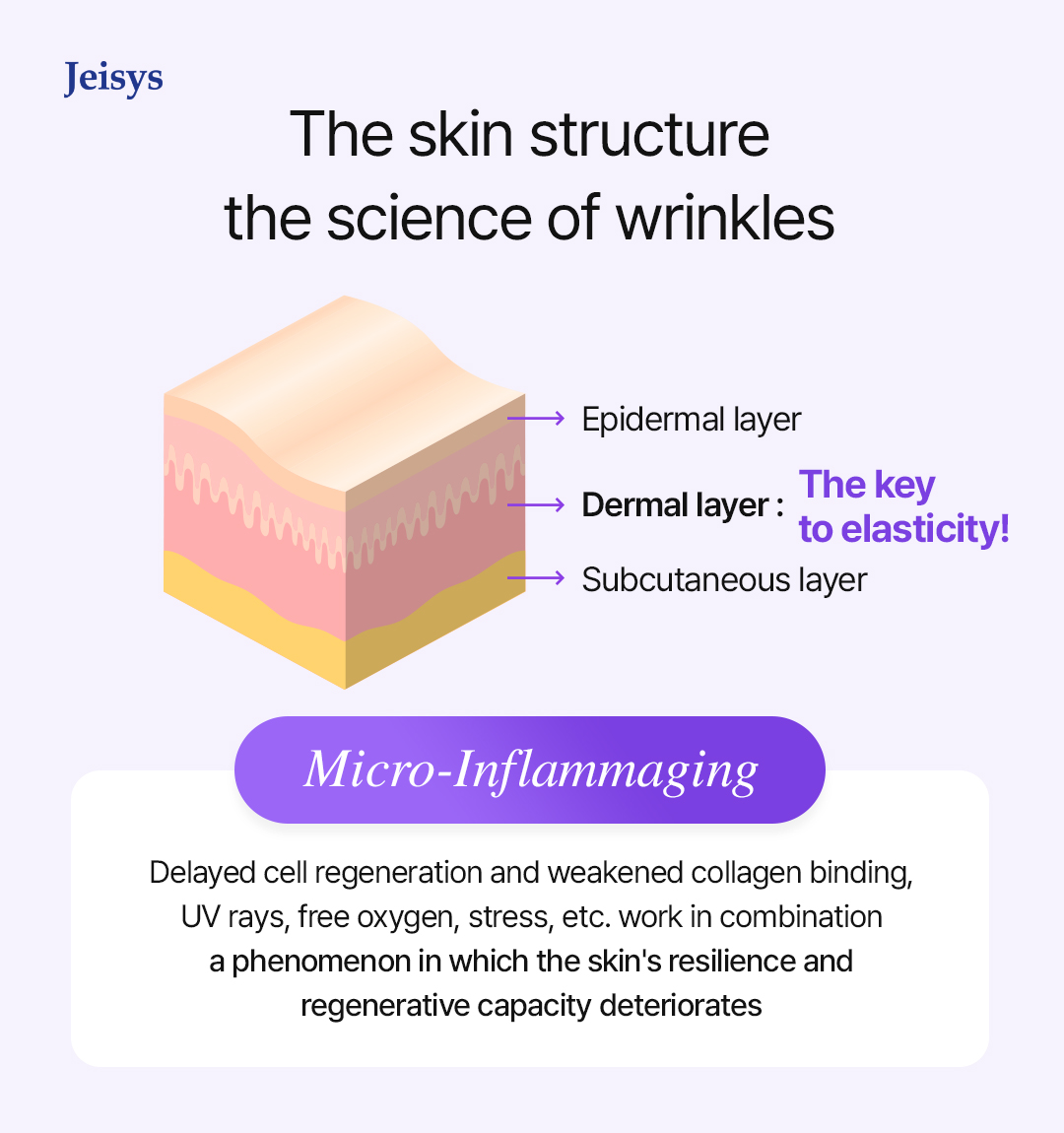
The skin is composed of the epidermis, dermis, and subcutaneous fat layer,
and the collagen and elastin in the dermis are the key components of elasticity.
However, when cell turnover slows and collagen bonding weakens,
the skin struggles to maintain its structure.
Ultraviolet rays cut collagen fibers, and reactive oxygen species oxidize cells,
hindering the repair of damaged tissues.
When stress and lack of sleep accumulate, micro-inflammation repeats inside the skin,
lowering its regenerative ability.
Dermatology refers to this condition as “micro-inflammaging.”
Though invisible at first, micro-inflammation stimulates collagen-degrading enzymes,
weakening dermal structure.
The skin loses elasticity, becomes rough, and wrinkles gradually appear.
Recently, environmental factors such as fine dust and blue light have also been found
to accelerate collagen damage.
The longer the skin is exposed to these stimuli, the more oxidative stress accumulates,
and the less energy the skin has for recovery.
Ultimately, accumulated environmental fatigue appears as “visible aging.”
Trend 3. Causes and Care Methods by Wrinkle Direction
Wrinkles differ in cause and care method depending on their direction and form.
- Vertical wrinkles: formed by facial habits and muscle tension
- Horizontal wrinkles: caused by skin irritation, repetitive pulling, and dryness
- Diagonal wrinkles: caused by loss of elasticity and sleeping posture
Sleeping on your side or stomach creates continuous pressure on specific areas,
which accelerates wrinkle formation.
In short, your skin remembers your daily life.
Today’s expressions and habits shape tomorrow’s facial lines.
Trend 4. Lifestyle Routines to Prevent Fine Wrinkles
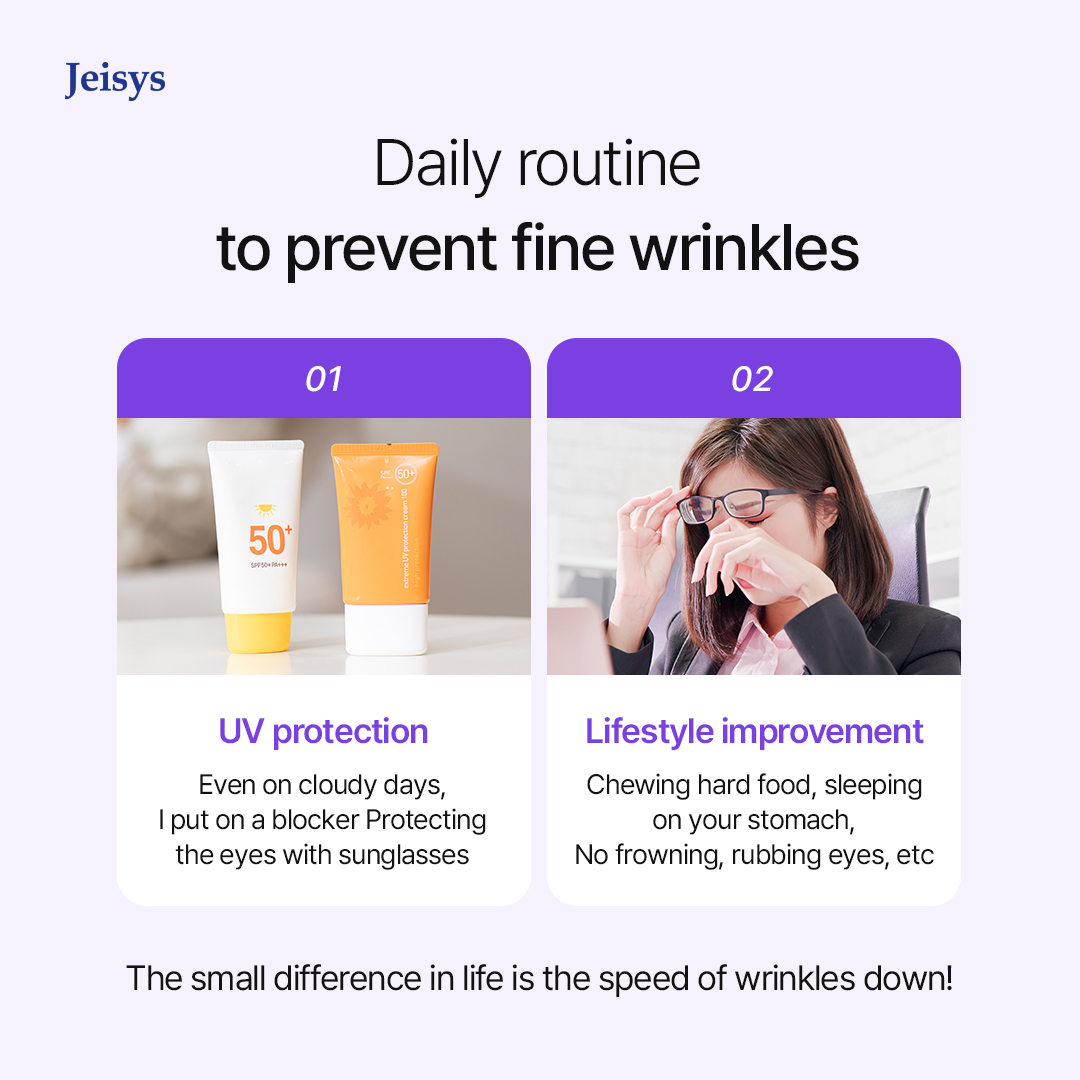
The most effective way to prevent skin aging is sun protection.
UV rays activate collagen-degrading enzymes and accelerate loss of elasticity,
especially speeding up crow’s feet and nasolabial folds.
Apply sunscreen even on cloudy days,
and protect the eye area with sunglasses during peak sunlight hours.
Lifestyle habits matter as well.
Frequently chewing hard foods, sleeping face-down, or smoking deepens nasolabial folds.
Squinting in strong sunlight or staring at a monitor for long periods creates frown lines.
Rubbing your eyes or looking at your phone too closely also contributes to eye wrinkles.
A nutrient-rich diet, regular exercise for circulation, proper hydration,
and sufficient sleep help restore the skin’s natural resilience.
Small lifestyle differences are the key to slowing down wrinkles.
Trend 5. How to Manage Wrinkles That Have Already Formed
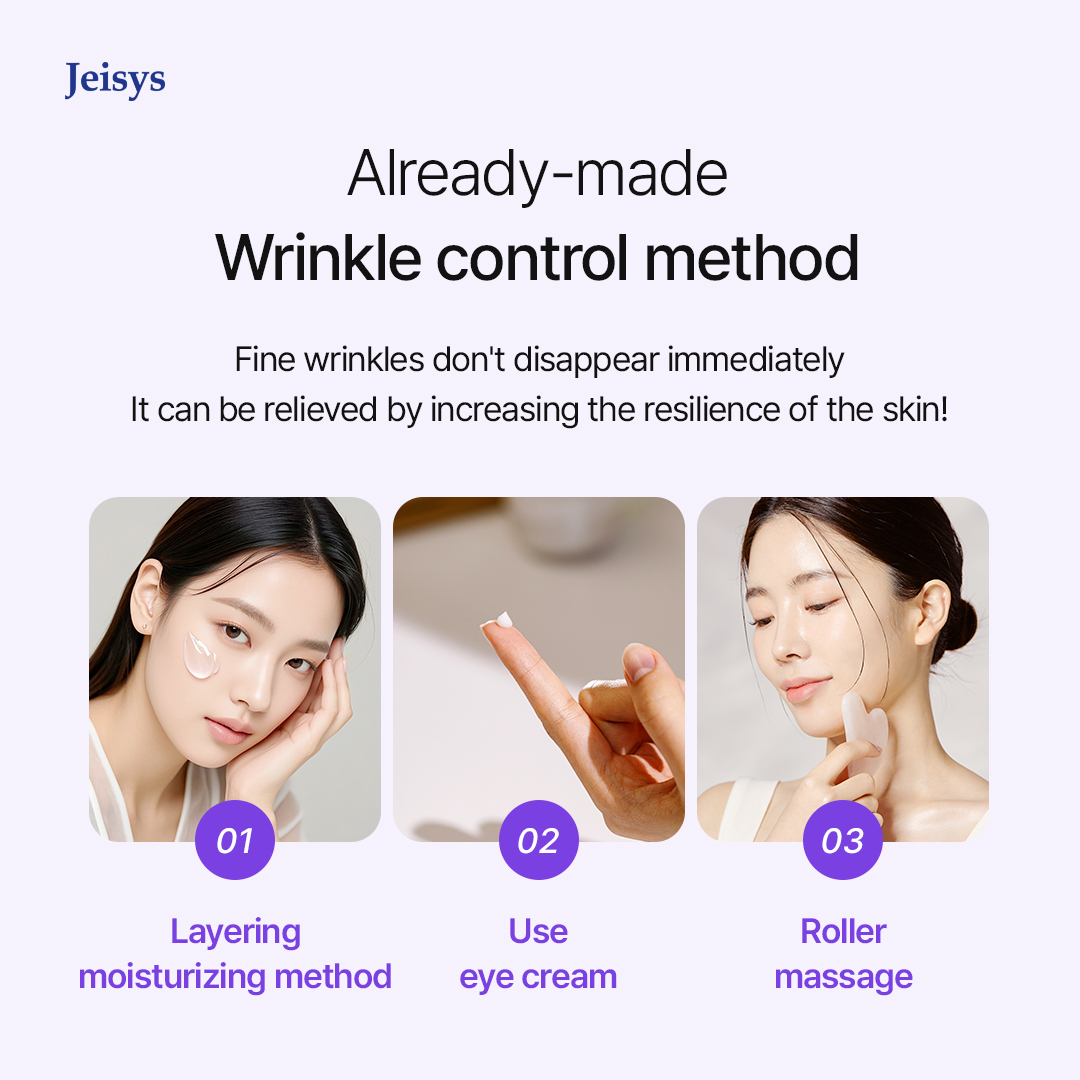
Layered Moisturizing Method
Fine wrinkles that have already settled will not disappear instantly,
but they can be eased by strengthening the skin’s recovery ability.
After cleansing, while the skin is still damp, refine the texture with toner,
then fill the deeper layers with hydrating serum or ampoule,
and finish with a cream.
Creams containing ceramides, fatty acids, and cholesterol
help repair the skin barrier.
Layering hydration to prevent moisture evaporation—the “layered moisturizing method”—is effective.
Start with lightweight hydrating products,
and form a moisture shield with a richer cream at the final step.
This helps protect the skin from long-lasting dryness.
Using Eye Cream
Eye cream is effective for softening eye wrinkles,
but incorrect application reduces its benefits.
Differentiate between day-night formulas and nighttime-only products.
Over-application may cause irritation or stimulate sebaceous glands.
Use a grain-of-rice-sized amount and gently tap it around the eye area.
Chilled eye cream provides cool-warm stimulation,
helping circulation and reducing puffiness.
Massage with a Roller
Massage is also effective in restoring skin elasticity.
Gently relaxing tense muscles with a facial roller or massage ball
improves blood flow and smooths the skin texture.
Using sheet masks or sleeping masks 2–3 times a week
helps replenish moisture, ease surface wrinkles, and brighten the complexion.
Wrinkles do not tell your age.
They are the record of your expressions, habits, and environment.
Wrinkle care is not about dramatic procedures—
it is about how consistently you maintain your daily routine.
Rather than erasing wrinkles, delaying their formation—that is the true essence of care.
Steady routines and balanced living are what make facial wrinkles look their most beautiful.

