
- Author
- Date
- 2026-03-04
- Views
- 143
You finally beat the breakouts. No more surprise pimples before meetings, no more emergency concealers. And yet, they are there. Marks, indentations, and shadows that seem to announce, "acne once lived here!"
If this sounds familiar, you are not alone. Acne scars affect up to 95 percent of people with moderate to severe acne. Even milder acne can leave lasting marks if inflammation runs deep or treatment is delayed. The good news? Acne scars are treatable, and confidence is very much recoverable.
Let us talk honestly, no miracle claims, no Instagram filters; just practical, patient-friendly guidance that actually helps.
First, a reality check. Scars are common and normal
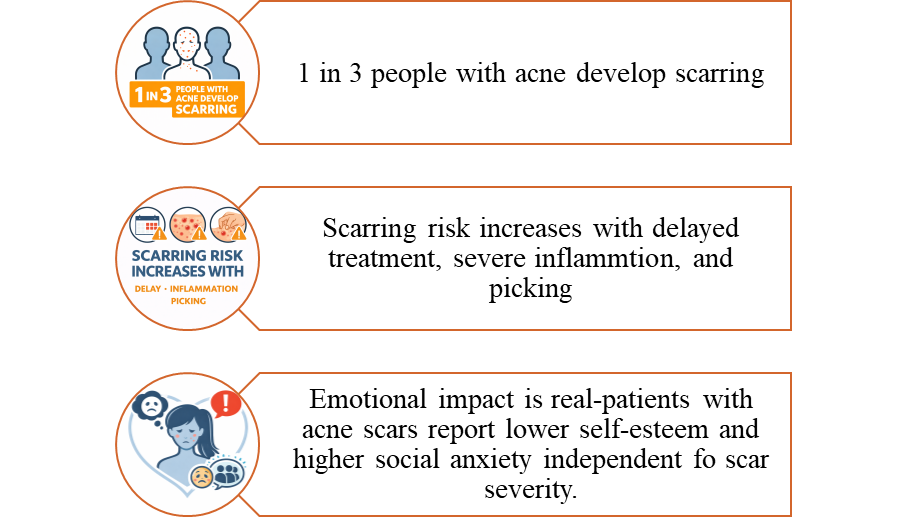
Acne is one of the most common skin conditions worldwide, affecting about 85 percent of people between the ages of 12 and 24, and many adults well beyond that. Studies published in dermatology showed that:
So, if scars are affecting how you feel about your face, your confidence, or even social situations, this is not vanity. It is valid.
Not all "scars" are the same (and this matters)
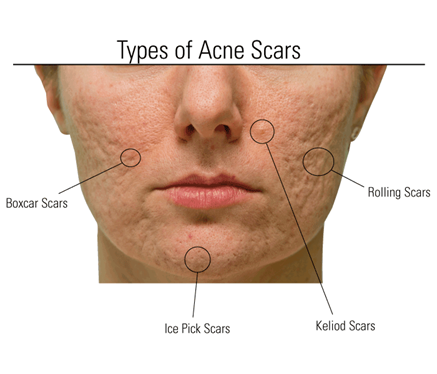
Before jumping into treatments, it is important to know what you are dealing with. Many people use "scars" as a blanket term, but dermatologists divide them into clear categories:
Atrophic (depressed) scars
These are caused by loss of collagen during healing.
- Ice-pick scars: narrow, deep pits
- Boxcar scars: wider, sharp-edged depressions
- Rolling scars: soft, wave-like texture changes
Post-inflammatory marks (not true scars)
- Post-inflammatory hyperpigmentation (PIH): brown or gray spots, common in deeper skin tones
- PIE: Red or pink marks, more common in lighter skin tones
Important truth: Marks fade. Scars need treatment. Mixing the 두 가지 leads to frustration.
Can acne scars heal on their own?
Marks often do, scars usually do not, at least not completely.
- PIH and redness can fade over 3-12 months with the right skincare and sun protection
- True scars reflect structural skin damage and usually need procedural treatment for visible improvement
That does not mean aggressive treatments for everyone. It means the right treatment for the right scar.
What actually helps: treatment options that make sense
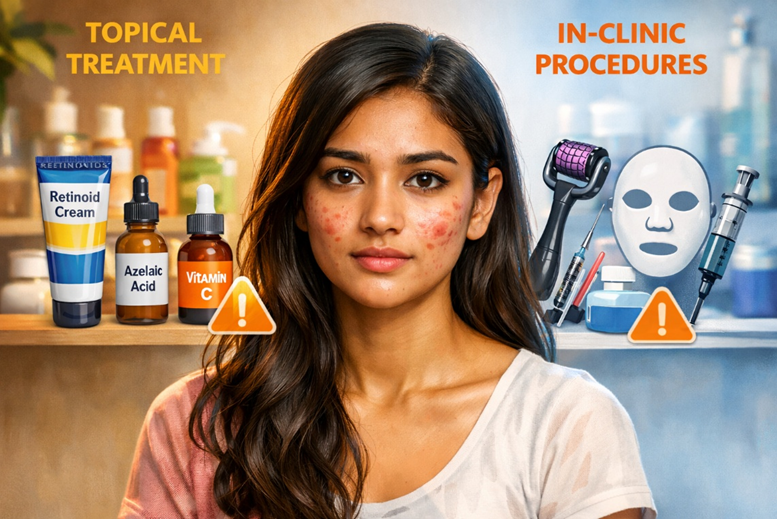
Topical treatments (best for marks, early scars)
These will not erase deep scars, but they are a solid foundation.
- Retinoids: stimulate collagen, improve texture over time
- Azelaic acid: helps pigmentation and redness
- Vitamin C: supports collagen and brightening
- Daily sunscreen: non-negotiable (SPF 30+)
Consistent use over 3-6 months can visibly improve tone and early textural changes.
In-clinic procedures (where real change happens)
Backed by strong clinical evidence and dermatology 가이드라인:
- Microneedling
- Radiofrequency Microneedling
- Subcision: releases tethered scars from underneath
- Chemical peels: useful for pigmentation and mild scarring
- Laser treatments: fractional lasers improve texture and depth
- Fillers: temporary improvement for 함몰 흉터
Combination treatments work better than single 시술. One-size-fits-all does not exist in scar management.
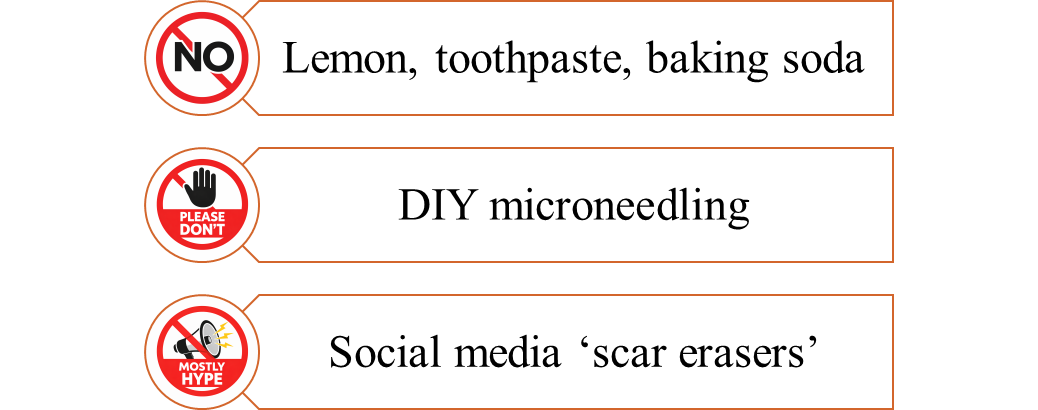
What about home remedies?
Healing the mind along with the skin
Multiple patient surveys show that acne scarring impacts:
- Social confidence
- Willingness to be photographed
- Professional self-image
But here is the hopeful part: Studies report that effective scar treatment significantly improves quality of life scores. Because confidence does not come from perfection. It comes from feeling in control again.
Practical tips you can start today
- Treat active acne aggressively - new scars are preventable
- Stop picking
- Use sunscreen daily, even indoors if you sit near windows
- See a dermatologist early rather than waiting it out.
- Track progress with photos, not daily mirror checks.
The bottom line
Acne scars are common. Treatable. And they do not define you. With the right understanding, realistic expectations, and expert guidance, skin can improve, and confidence often follows faster than expected.


