
- Author
- Date
- 2026-02-25
- Views
- 51
The skin defends during the day and recovers at night. This simple sentence contains the core of skin physiology.
During the day, the skin is exposed to numerous external irritants such as UV rays, fine dust, blue light, and temperature changes. In the process, cells undergo oxidative stress, and the skin collagen structure gradually weakens.
However, the situation changes at night. As body temperature gradually lowers and sympathetic nerve activity decreases, the skin switches into full-scale skin regeneration mode. The reason why the recent night repair-centered night care trend is spreading is precisely because of this nocturnal recovery mechanism.
Night is not just a time to apply cosmetics, but a biological golden time to maximize skin regeneration and skin collagen restoration. How you design this time determines the future of your skin.
Table of Contents
Trend 1. Skin's Biological Rhythm and Nighttime Recovery Cycle
Trend 2. Why Lack of Sleep Causes Sensitivity and Breakouts to Explode
Trend 3. Night Repair Routine Strategy (Soothing – Moisturizing – Barrier Care)
Trend 4. Skin-Friendly Lifestyle to Improve ‘Sleep Quality’
Trend 1.
Skin's Biological Rhythm and Nighttime Recovery Cycle
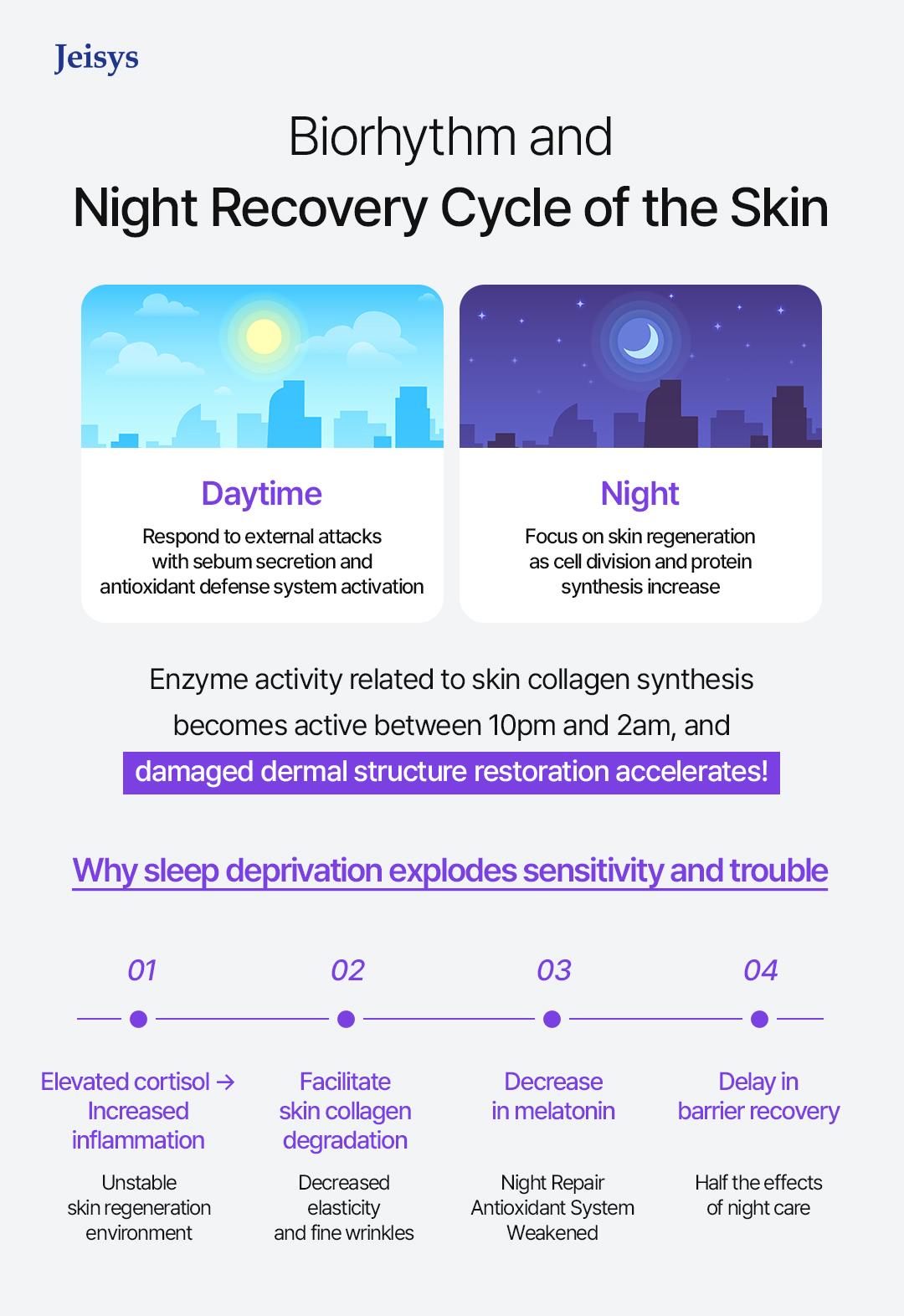
The skin functions differently according to its 24-hour biological rhythm (circadian rhythm). During the day, sebum secretion and antioxidant defense systems are activated to respond to external attacks. On the other hand, at night, cell division and protein synthesis increase, and skin regeneration is intensively carried out.
In particular, between 10 PM and 2 AM, enzyme activity related to skin collagen synthesis becomes active, and the restoration of damaged dermal structures is accelerated. Applying an appropriate night care routine during this time maximizes night repair efficiency.
Because skin permeability increases at night, the absorption rate of the same ingredients can be higher. However, if you fall asleep without any protection after washing your face, transepidermal water loss increases, and an environment for skin regeneration cannot be sufficiently created. Ultimately, night is not an 'automatic recovery time,' but a structural restoration period that is only completed when designed management is added.
• Increased Nighttime Cell Turnover: At night, epidermal cell division accelerates, and skin regeneration is intensively carried out.
• Activation of Skin Collagen Synthesis: The expression of enzymes related to collagen production increases in the dermal layer.
• Increased Skin Permeability: The absorption efficiency of night repair ingredients becomes relatively higher.
• Increased Transepidermal Water Loss: Without sufficient barrier protection, the night care effect decreases.
Trend 2.
Why Lack of Sleep Causes Sensitivity and Breakouts to Explode
Lack of sleep deals a direct blow to the skin structure. When sleep time decreases, the level of cortisol, a stress hormone, rises. This promotes inflammatory responses and delays the speed of skin regeneration.
At the same time, the activity of skin collagen-degrading enzymes increases, accelerating the loss of elasticity. Additionally, melatonin secreted during sleep has a powerful antioxidant effect, but this function weakens when the sleep rhythm is broken. As a result, the night repair system fails to function normally, leading to repeated breakouts and fine lines.
No matter how high-functioning night care products you use, if the quality of sleep is low, skin regeneration is bound to be limited. Decreased skin collagen, a dull complexion, and frequent breakouts are not just signs of aging, but can be signals of 'nighttime recovery failure.'
• Elevated Cortisol -> Increased Inflammation: This makes the skin regeneration environment unstable.
• Acceleration of Skin Collagen Degradation: This hastens the loss of elasticity and the formation of fine lines.
• Decreased Melatonin: The night repair antioxidant system is weakened.
• Delayed Barrier Recovery: Lack of sleep halves the effectiveness of night care.
Trend 3.
Night Repair Routine Strategy
(Soothing – Moisturizing – Barrier Care)
Effective night care requires a step-by-step design. First, in the soothing stage, heat and micro-inflammation are lowered to organize the skin regeneration environment. Then, through intensive moisturizing, sufficient moisture required for cell metabolism is supplied. Finally, the barrier is strengthened so that the night repair effect is maintained throughout the night.
Skin collagen synthesis occurs more efficiently in a stable moisture state and a low-inflammation environment. Therefore, night care is not just about providing moisture, but a process of creating the foundation that activates the skin regeneration system.
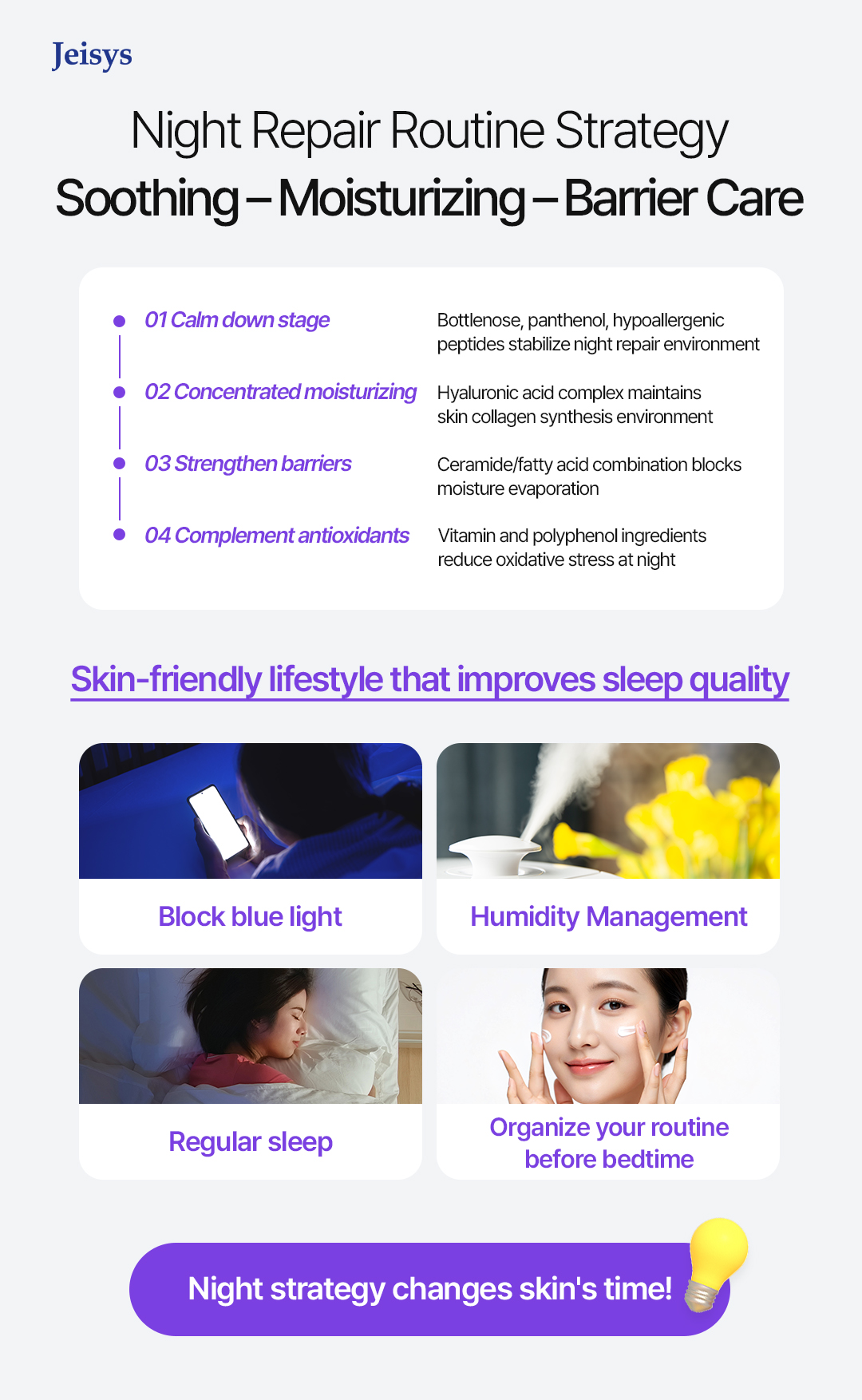
• Soothing Stage: Centella asiatica, panthenol, and low-irritant peptides stabilize the night repair environment.
• Intensive Moisturizing: Hyaluronic acid complexes maintain the skin collagen synthesis environment.
• Barrier Strengthening: The combination of ceramides and fatty acids blocks moisture evaporation.
• Antioxidant Supplementation: Vitamin and polyphenol ingredients reduce nighttime oxidative stress.
Trend 4.
Skin-Friendly Lifestyle to Improve ‘Sleep Quality’
Skin regeneration is closely related to lifestyle habits. Reducing exposure to blue light before bedtime increases melatonin secretion, improving night repair efficiency. Maintaining indoor humidity at 40-60% can reduce the loss of skin collagen. Regular bedtimes keep the skin regeneration cycle constant through biological rhythm stabilization. Additionally, reducing caffeine intake and performing light stretching improves blood circulation, increasing the delivery efficiency of night care ingredients.
Night repair is an integrated management concept that goes beyond product use to include lifestyle design.
• Blocking Blue Light: Promotes melatonin secretion -> Stabilizes the skin regeneration environment.
• Humidity Management: Protects skin collagen and reduces moisture loss.
• Regular Sleep: Maintains night repair efficiency.
• Evening Routine Organization: Improves the absorption rate of night care.
Night Strategies Change Skin Time
Night is the time when skin regeneration is most active and is the structural recovery period where skin collagen restoration begins. Night repair is not just a trend, but a scientific approach based on biological rhythms. When systematic night care—consisting of soothing, moisturizing, and barrier strengthening—is combined with a stable sleep environment, skin regeneration efficiency is maximized.
A repeated night repair routine protects skin collagen density and creates a long-term elastic structure. Tonight's night care is not just a habit, but a strategy for designing the skin's future. As consistent skin regeneration management builds up, skin collagen is maintained, and the morning skin shows a different balance than the day before.

