
- Author
- Date
- 2026-02-06
- Views
- 184
Doesn't it feel like the skin that was sensitive all winter has calmed down a bit lately?
Dead skin cells aren't flaking like they used to, sudden breakouts have decreased, and when doing skincare, there are more days when you feel the moisturizer “absorbing instead of just sitting on the surface.” However, even so, it feels like there is still an uneasy energy somewhere to say that the skin has completely improved.
This leads to concerns like: “Should I strengthen my skincare now?” or “Is it right to just leave it as it is?”
In fact, skin during this period is in a very subtle state. Skin recovery isn't finished yet, but it's close to the entry stage where recovery is just beginning. And precisely because the direction of management at this exact timing determines your spring skin condition, it is a truly critical period.
Table of Contents
Trend 1. Skin Moves Through ‘Defense -> Recovery’ Stages
Trend 2. The Key Keyword for ‘Recovery Mode’ Skin = Organize & Rearrange
Trend 3. ‘Wrong Choices’ Many People Make During This Period
Trend 1. Skin Moves Through ‘Defense -> Recovery’ Stages
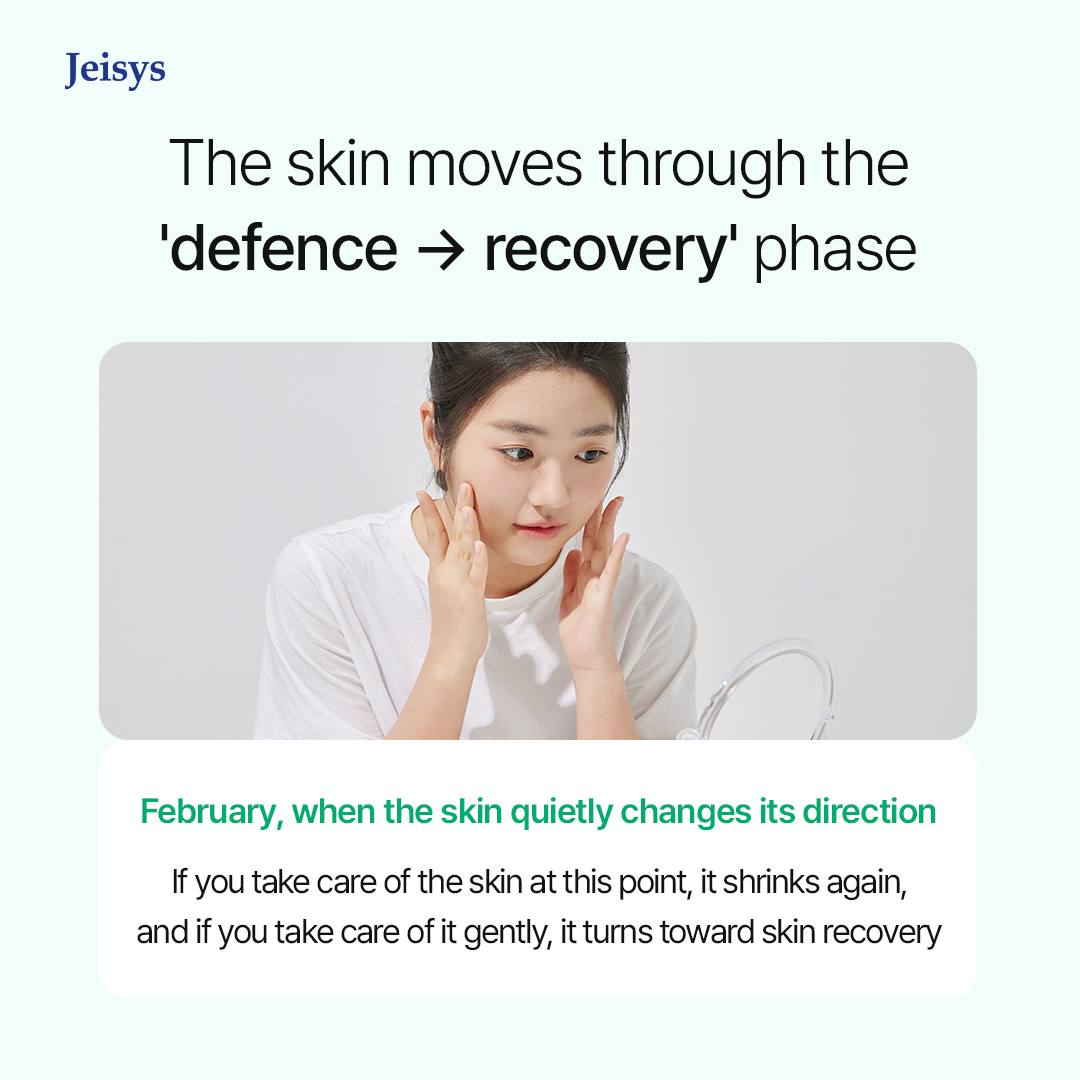
- February, the Point Where Skin Quietly Changes Direction -
During winter, the skin was always in a state of tension. Amidst cold air, dry interiors, and large daily temperature fluctuations, the skin focused all day on its role of protecting the skin barrier. During this time, the skin had only one priority: protecting itself from external irritants.
That’s why winter skin tightened its barrier, minimized sebum secretion, and spent energy on defense rather than regeneration!
However, as we pass through February, the skin begins to send slightly different signals. Skincare products that used to sting feel less irritating, dead skin cells settle down quietly rather than flaking, and you feel that the moisture applied at night lasts until the morning. This means the skin is starting to ask, “Can I stop just defending and start organizing the inside?”
At this point, if you manage the skin aggressively, it will shrink back again, but if you treat it gently, it will turn its direction toward skin recovery.
Trend 2. ‘Recovery Mode’ Skin = Organize & Rearrange
- A Time to Tidy Up What Remains Rather Than Filling New -
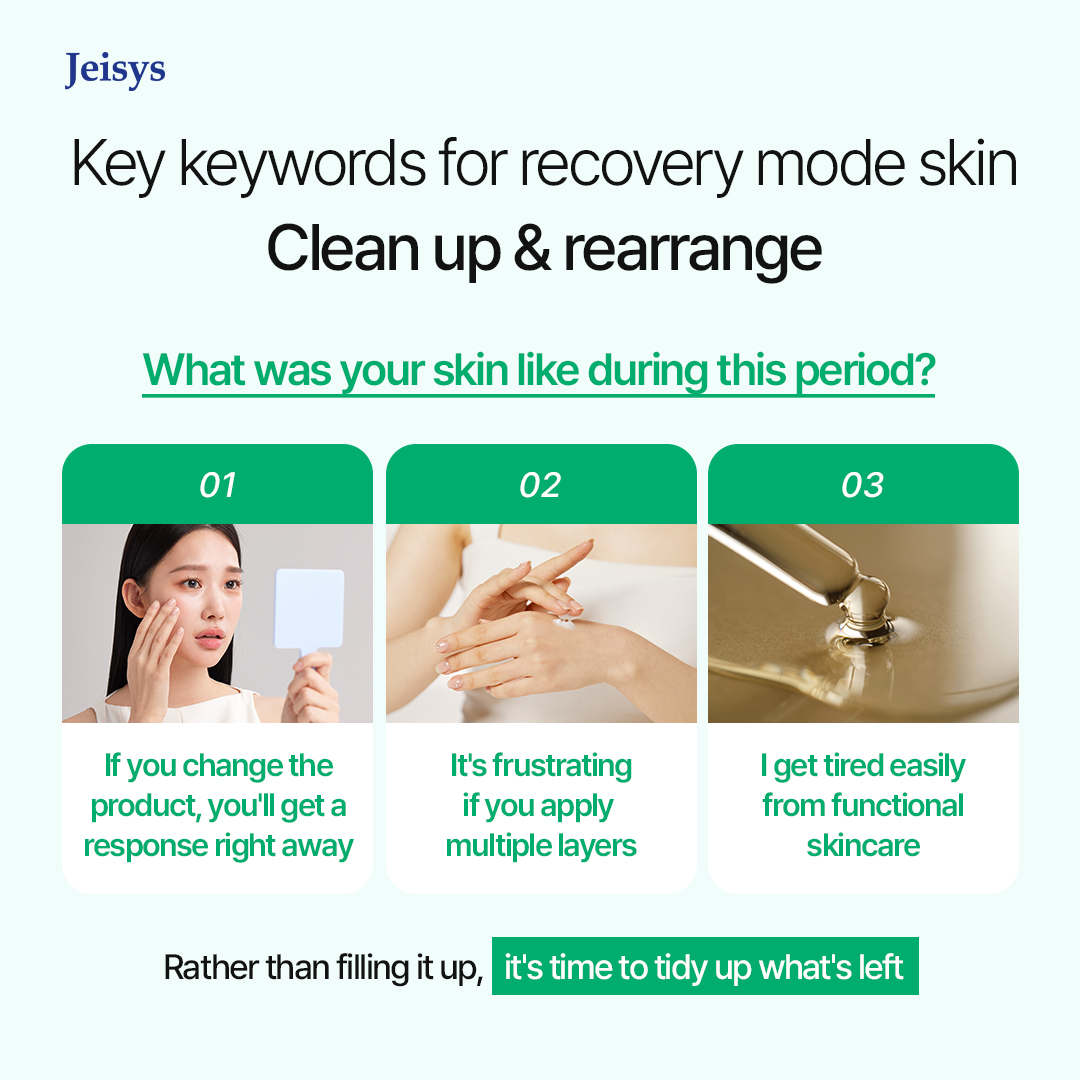
Surprisingly, skin that has entered recovery mode collapses more easily the greedier you get. At this time, the skin is in a state closer to “I’ll organize what I have now” rather than “Give me more!” That’s why skin during this period shows these reactions:
• Reacts immediately when you change products
• Feels suffocated when applying multiple layers
• Gets tired easily from functional skincare
This doesn't mean the skin has weakened; it means it's busy with skin soothing and organizing, so it has no room to spare. Management that works well during this period is actually simple: reduce skincare steps, keep only essential products, and take a break from the intensive care you’ve been doing daily.
For example, if your routine involved exfoliating 2–3 times a week, once a week is enough for this period. It’s more important to focus on rebuilding the skin barrier. Skin recovers fastest when it feels, “Ah, now I can finally breathe!”
Trend 3. ‘Wrong Choices’ Many People Make During This Period
- Mistakes Made More Often Because It Seems Like It’s Getting Better -
The biggest trap of this period is the ‘feeling’ that the skin has improved slightly. When thoughts like “My skin seems okay lately?” arise, we often make these choices:
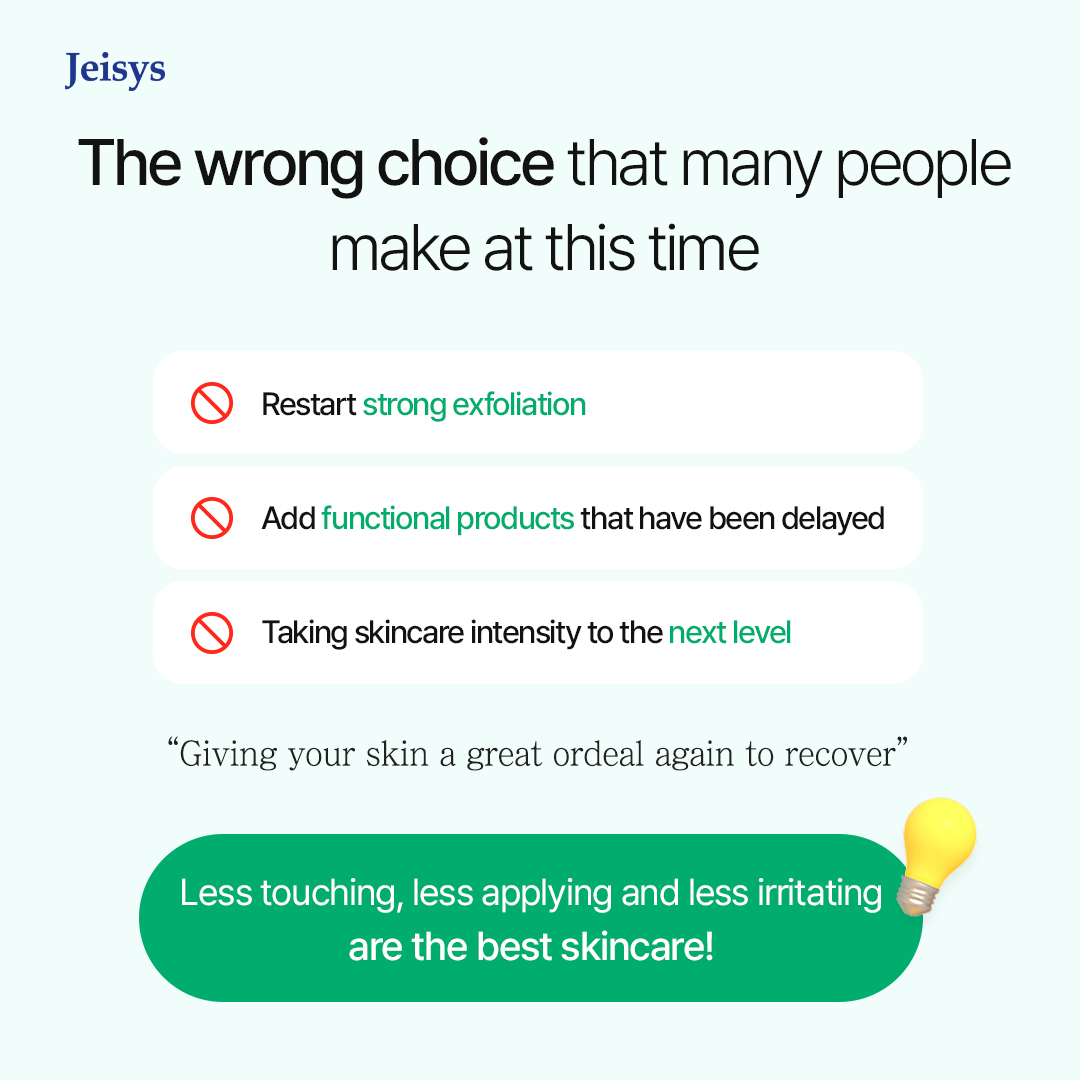
• Restarting strong exfoliation!
• Adding functional products you’ve been putting off!
• Upgrading skincare intensity by one level!
But this is like giving a great trial back to the skin that was trying to recover. The skin hasn't finished organizing or its skin recovery yet, so if irritation enters again, it immediately returns to defense mode. That’s why a common pattern among those around us is: “I did a bit more care because it seemed to get better for a moment, and then it became sensitive again…”
If you are experiencing such difficulties, you must realize that it's not that the management was wrong, but that the timing was off. In spring skincare, what you ‘don't do’ might be more important than what you ‘do.’
With spring ahead, what the skin needs most is not change, but room to breathe. It is about waiting so the skin, exhausted from fighting external irritants all winter, can perform skin soothing and skin recovery on its own. Touching a little less, applying a little less, and irritating a little less is the best skincare. Thus, if you follow the timing of skin management well, one day you will suddenly feel, “My skin feels comfortable lately.”
Spring skin doesn't suddenly get better; it is determined by how you spend this quiet period! Now is not the time to manage more diligently, but a time when it’s okay to step back and watch so the skin barrier can regain its own rhythm.
Remember!
The start of recovery is not ‘addition,’ but ‘emptying’ and ‘waiting.’

