
- Author
- Date
- 2025-12-19
- Views
- 506
Now that external stimuli such as masks, fine dust, and UV rays have become part of daily life, our skin is shaken much more easily than in the past. Sensitive skin turns red at the slightest change, breaks out, and even feels stinging from skincare products. This is the era of the so-called 'Pro-Sensitive.'
Sensitive skin is not just an easily irritated skin type; it is a skin condition in which the skin soothing routine, defensive power, and skincare selection must all be redesigned. Today, we will completely organize everything from the process of how sensitive skin is formed to low-irritation skincare strategies, daily skin soothing tips, and emergency management when the skin suddenly breaks out.
Table of Contents
- Trend 1. How is Sensitive Skin Formed?
- Trend 2. Why 'Skip-Care' is Important for the Pro-Sensitive
- Trend 3. Daily Habits That Worsen Sensitivity
- Trend 4. Cosmetic Selection Criteria for Sensitive Skin
- Trend 5. Ingredients to Avoid and Correct Usage
- Trend 6. Emergency Care When Skin Breaks Out
- Trend 7. Sun Protection Strategy for Sensitive Skin
Trend 1. How is Sensitive Skin Formed?
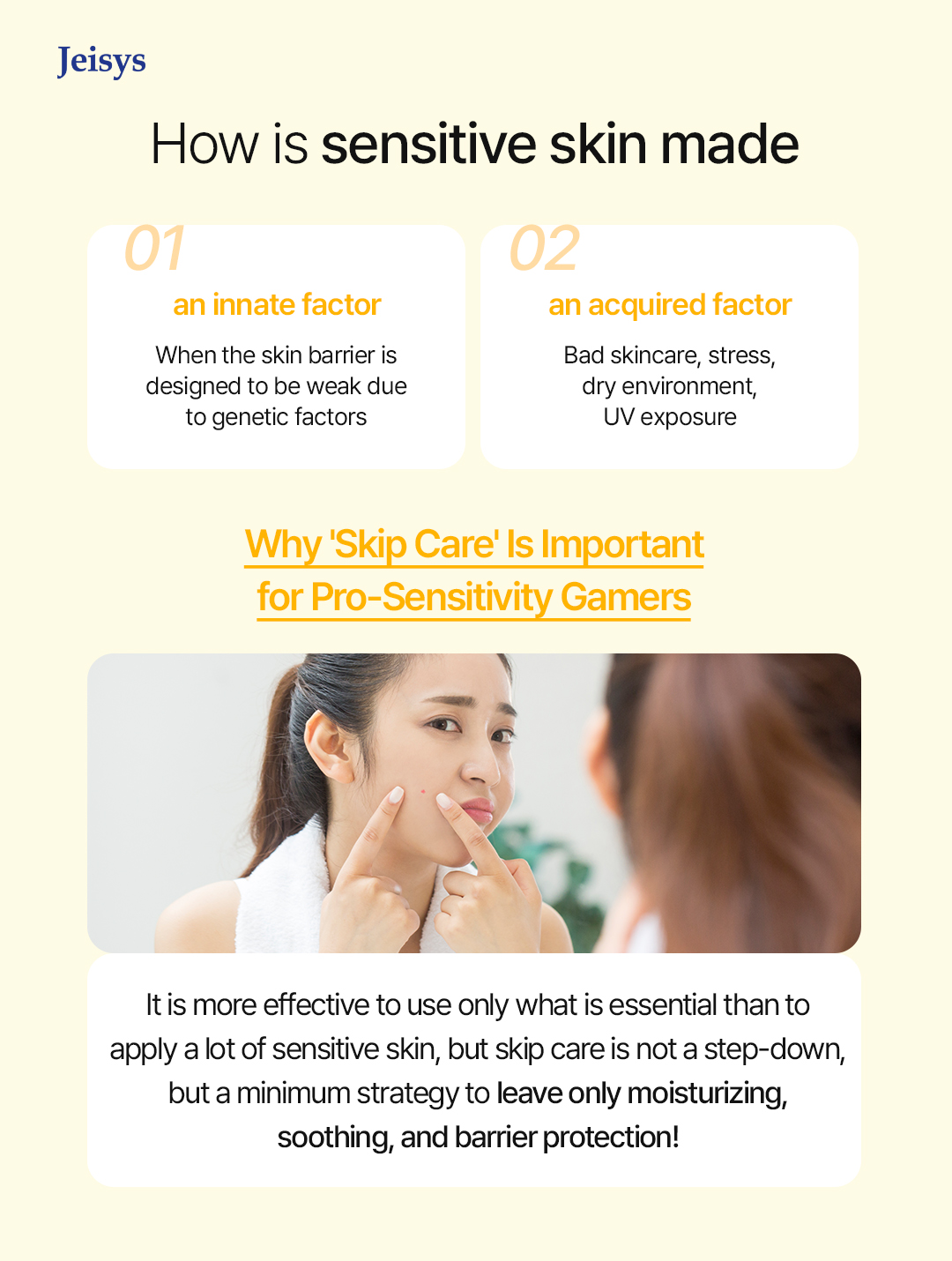
Sensitive skin is formed through a complex interplay of congenital and acquired factors. While some skin barriers are designed to be weak due to genetic factors, anyone can easily progress to sensitive skin if acquired stimuli such as incorrect skincare methods, excessive stress, dry environments, and UV exposure accumulate.
In particular, if you excessively strip the barrier during the skincare process or repeat a routine that lacks sufficient skin soothing time, the skin becomes fixed in an always-sensitive state. Once you pass into the sensitive skin stage, the recovery speed slows down, and immediate redness and stinging appear even with small stimuli.
Trend 2. Why 'Skip-Care' is Important for the Pro-Sensitive
For sensitive skin, applying less is a more effective form of skincare than applying more. Harsh cleansing, excessive layering, and miscellaneous functional products make the skin barrier thinner and provide another stimulus before skin soothing can take place.
Skip-care is not simply a concept of reducing steps, but a strategy to leave only the minimum hydration, soothing, and barrier protection that the skin needs right now. This method creates space for the skin to recover on its own, alleviating the instability characteristic of sensitive skin.
Trend 3. Daily Habits That Worsen Sensitivity
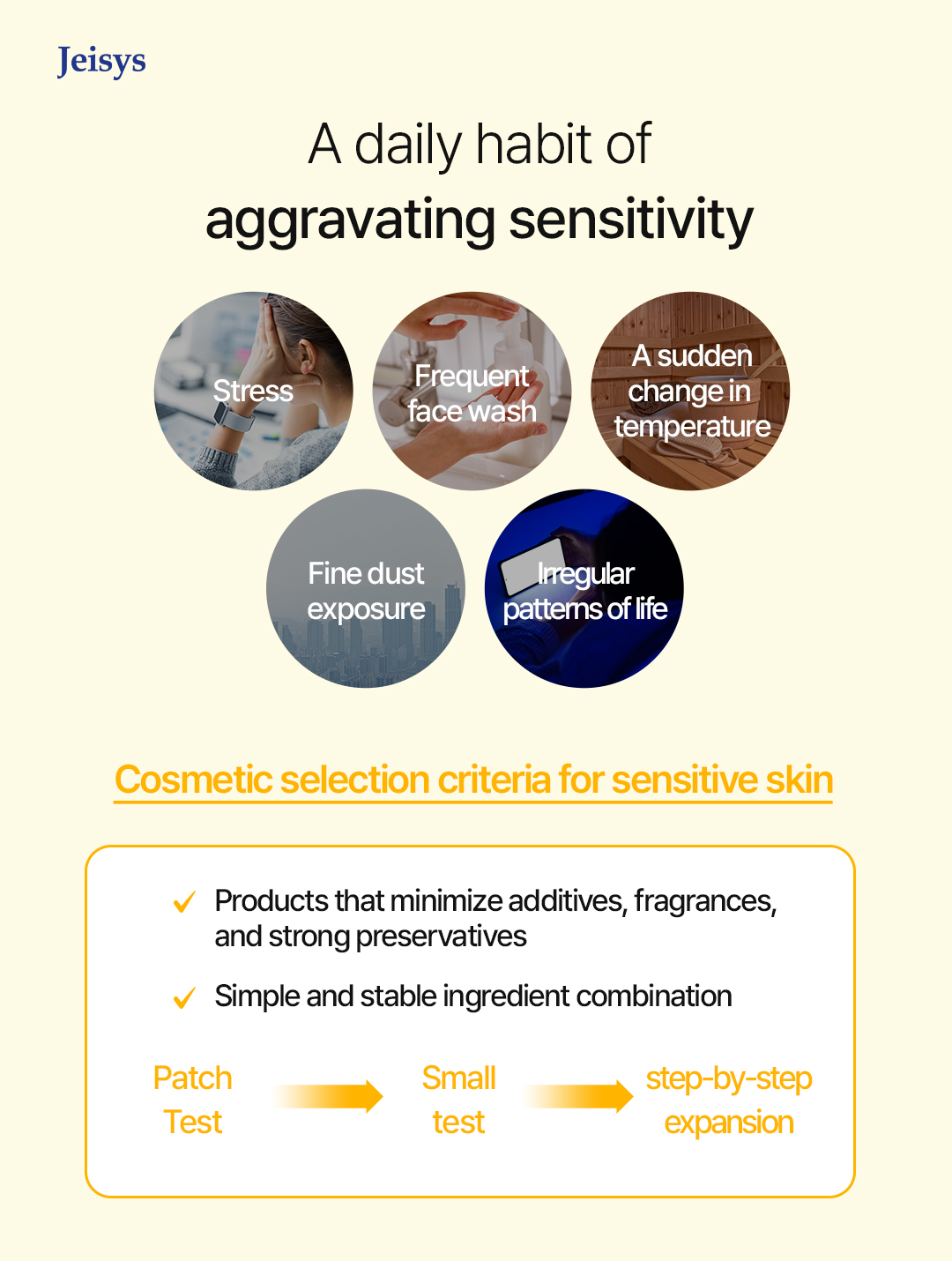
Sensitive skin reacts sensitively even to small daily habits. An increase in stress → a rise in body temperature → the spread of heat makes skin soothing difficult and induces breakouts.
Also, frequent washing, harsh cleansing, and frequent exfoliation reduce the effectiveness of skincare and cause repeated skin damage. Sudden temperature changes (saunas, hot and cold baths), dry indoors, and exposure to fine dust are also factors that rapidly worsen sensitivity. Because sensitive skin worsens in the long term if lifestyle patterns are irregular or sleep deprivation persists, habit management must be recognized as part of skincare.
Trend 4. Cosmetic Selection Criteria for Sensitive Skin
For sensitive skin, product selection at the skincare stage is most important. Products that minimize additives, fragrances, and strong preservatives, and those with simple and stable ingredient combinations, are basic requirements.
Even if a product contains ingredients that help soothe the skin (e.g., moisture, minerals, soothing-derived ingredients, etc.), it can become an irritant if your skin cannot accept it. Therefore, for sensitive skin, the ideal skincare method is to follow the three-step principle of Patch Test → Small Amount Test → Gradual Expansion.
Also, you must discard the formula 'a product that fits others well = a product suitable for me' and rely only on your own skin's reaction as the criteria.
Trend 5. Ingredients to Avoid and Correct Usage
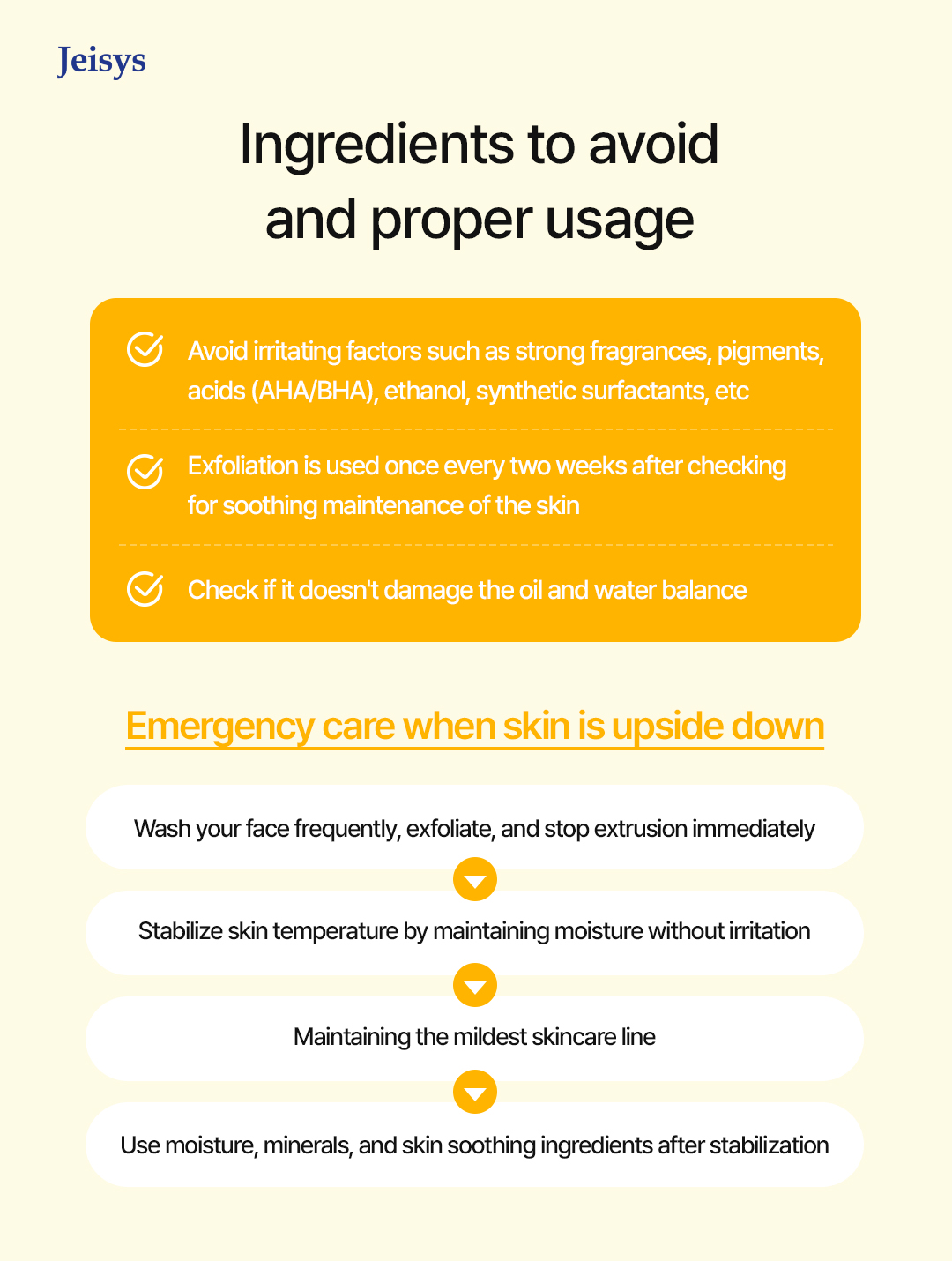
Sensitive skin must avoid irritants such as strong fragrances, pigments, acids (AHA/BHA, etc.), ethanol, and synthetic surfactants. In particular, acid ingredients are frequently used to increase skincare effects, but for sensitive skin, they excessively dissolve dead skin cells and accelerate barrier damage.
Exfoliation should be reduced to once every two weeks or less, and you should check whether the skin soothing stage is maintained stably while using it. Also, rather than blindly following popular skincare products, you must check whether the method does not disrupt the oil-moisture balance.
Trend 6. Emergency Care When Skin Breaks Out
The point when breakouts explode or the skin suddenly turns upside down is 'a state where the regeneration process has stopped.' At this stage, you must minimize skincare and focus 100% on skin soothing and hydration.
Immediately stop frequent washing, exfoliation, and extraction, and prioritize stabilizing the skin temperature while maintaining only non-irritating hydration. Since sensitive skin can react if too many nutritional ingredients are used during this process, it is best to maintain only the mildest skincare line. Once the condition stabilizes, you should slowly increase the steps, focusing on moisture, minerals, and skin-soothing ingredients.
Trend 7. Sun Protection Strategy for Sensitive Skin
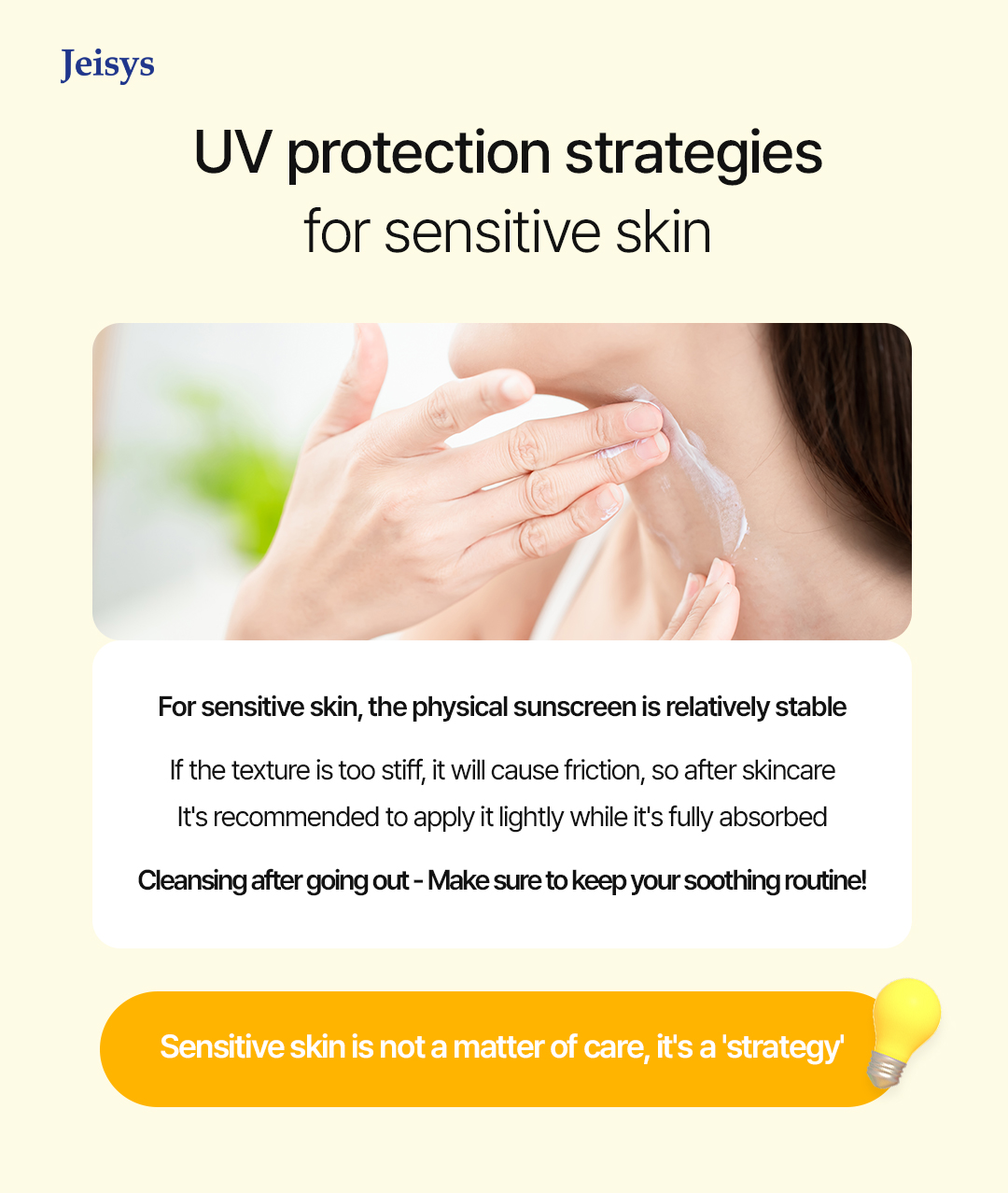
For sensitive skin, physical sunscreens are relatively more stable. Chemical filters have excellent UV protection effects but can induce skin heat and irritation, so it is safer for sensitive skin to avoid them.
Even with physical blockers, if the texture is too stiff, it can cause friction irritation, so we recommend spreading it lightly after skincare has been sufficiently absorbed. Since reapplying sunscreen over accumulated pollutants hinders skin soothing, you must follow a cleansing-soothing routine after going out.
Sensitive Skin is Not a Matter of Management, but a 'Strategy'
Sensitive skin is not just easily irritated skin; it stabilizes only when the barrier, circulation, regeneration, and skincare methods all work together. When you reduce your skincare routine, prioritize skin soothing, adjust your lifestyle patterns, and choose products carefully, sensitive skin finally stops wavering.
Ultimately, the key to sensitive skin survival is 'applying less but accurately,' and giving the skin enough time to recover.

