
- Author
- Date
- 2025-12-08
- Views
- 221
The Silent Countdown
Your skin has a clock, and it’s ticking faster than you think, not because of birthdays, but because of seven sneaky habits that speed up aging long before wrinkles appear.
Visible skin aging is attributed to sun exposure, air/water pollution, smoking, diet/exercise/stress, lifestyle, repetitive muscle contractions, gravity, sleeping positions, and cutaneous or general diseases/disorders. That means the choices you make every day, often without thinking, can either protect your glow or push the fast-forward button on sagging, dullness, and fine lines.
Why Does Early Aging Happen?
Skin aging isn’t a sudden event; it’s a slow, silent process. Collagen loss begins as early as your mid-20s, reducing skin’s firmness by about 1% each year. Combine that with oxidative stress from pollution and UV rays, and the damage compounds silently. That dull patch or faint crease you noticed last month? It’s not random; it’s a sign of cumulative stress on your skin.
Before deep wrinkles appear, early signs such as uneven tone, loss of elasticity, and dryness creep in. And often, the culprits are hiding in plain sight.
Early Signs to Watch For
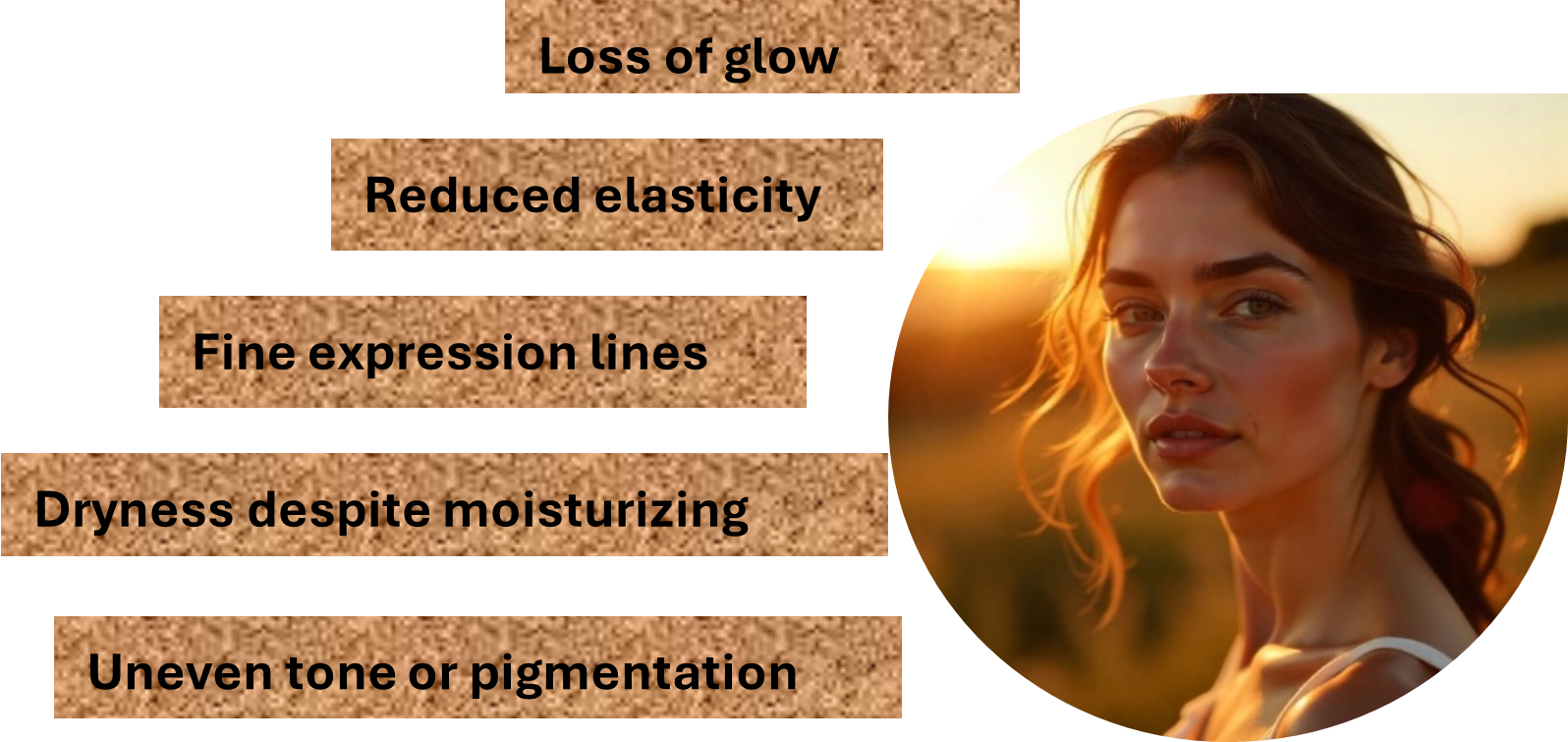
Before wrinkles appear, your skin sends subtle signals. Here’s what to look for:
- Uneven Tone: Skin looks dull, gray, and makeup doesn't sit well.
- Increased Fine Lines: Noticeable creases around eyes or mouth due to dryness.
- Loss of Elasticity: Skin takes longer to snap back when gently pinched.
- Pore Size: Pores start to look elongated or teardrop-shaped.
- Dryness: Skin requires significantly more moisturizer than usual.
These changes accumulate slowly, making early intervention essential. Catch these early, and you can reverse or slow the clock.
Lifestyle vs. Genetics: The Truth
Studies suggest that collagen synthesis declines gradually from young adulthood, leading, over decades, to noticeable loss in skin firmness and elasticity. Research indicates that most visible skin aging, roughly around 80%, is driven by environmental and lifestyle factors, such as sun exposure, pollution, and habits. In contrast, intrinsic (genetic) aging plays a minor role. Genetics set the baseline, but lifestyle determines the pace. Two people with similar genetic makeup can age differently based on habits such as sun exposure and diet.
Translation: You have more control than you think. Most skin aging is modifiable!
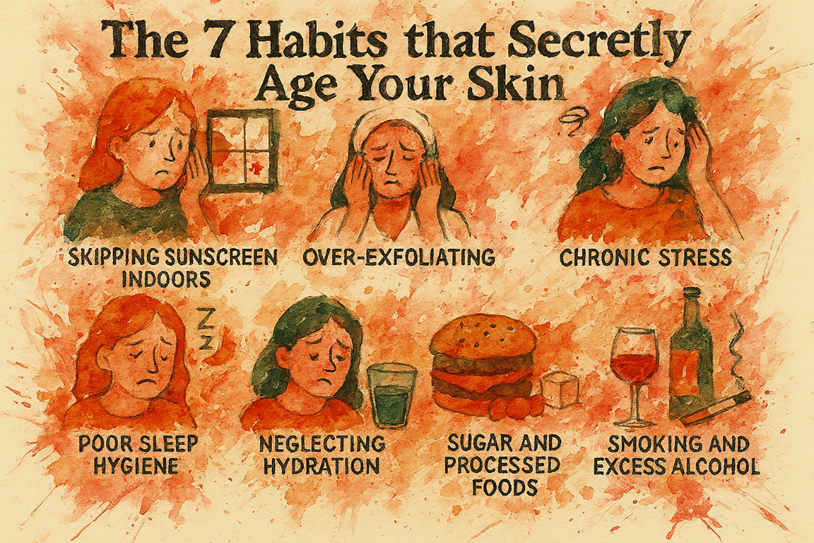
The 7 Habits that Secretly Age Your Skin
Here’s what to watch out for—and how to break the cycle.
1. Skipping Sunscreen Indoors
Think sunscreen is only for beach days? Think again. UV rays penetrate windows, and even indoor lighting and screens emit low-level radiation. Studies show that 90% of photoaging, including wrinkles, spots, and sagging, is caused by UV exposure.
Why does it matter? UV rays trigger free radicals that damage collagen and elastin, leading to premature sagging and pigmentation.
Break the habit:
- Apply a broad-spectrum SPF 30+ daily, rain or shine.
- Reapply every 2 hours if outdoors.
- Pair sunscreen with antioxidants like vitamin C for double protection.
2. Over-Exfoliating
Scrubbing away dead cells feels satisfying, but overexfoliation strips your skin barrier, causing inflammation and accelerated collagen breakdown.
Why it matters: A damaged barrier leads to greater water loss, irritation, and increased susceptibility to pollutants.
Break the habit:
- Limit chemical or physical exfoliation to 1–2 times a week.
- Focus on gentle cleansers.
- Use barrier-repair moisturizers.
3. Chronic Stress
Stress isn’t just mental, it’s molecular. High cortisol levels degrade collagen and elastin, making skin thinner and more prone to wrinkles.
Why it matters: Stress also increases oil production, triggering breakouts and dullness.
Break the habit:
- Practice stress-relief techniques such as deep breathing, yoga, or even a 10-minute walk.
- Maintain regular sleep and meal routines.
Your skin will thank you.
4. Poor Sleep Hygiene
Collagen repair peaks between 11 pm and 4 am. Skimping on sleep means skipping your skin’s prime recovery window.
Why it matters: Sleep deprivation increases inflammation and slows cell turnover, making skin look tired and older.
Break the habit:
- Aim for 7–8 hours of quality sleep.
- Elevate your head slightly to reduce puffiness.
- Reduce late-night screen exposure.
5. Sugar and Processed Foods
Sugary treats trigger glycation, a process in which sugar molecules bind to collagen, making it stiffer and more brittle.
Why it matters: Glycation accelerates the appearance of wrinkles and dullness, while processed foods increase inflammation.
Break the habit:
- Swap refined carbs for antioxidant-rich foods: berries, greens, nuts, and omega-3s.
- Replace refined carbohydrates with whole foods.
6. Neglecting Hydration
Dehydrated skin looks dull and accentuates fine lines. Internal hydration matters as much as topical care.
Why it matters: Lack of water reduces nutrient delivery and elasticity.
Break the habit:
- Drink at least 2–3 liters of water daily.
- Use moisturizers with hyaluronic acid and ceramides to lock in hydration.
- Limit excessive caffeine.
7. Smoking and Excess Alcohol
Studies have shown that compared to non-smokers, smokers may have around 18-22% reduced collagen synthesis in their skin, a significant factor in premature wrinkles, sagging, and loss of firmness. [1]
Why it matters: Both habits accelerate oxidative stress and slow healing.
Break the habit:
- Quit smoking.
- Limit alcohol to occasional indulgence.
- Support detox pathways with antioxidants.
Your skin and overall health will glow for it.
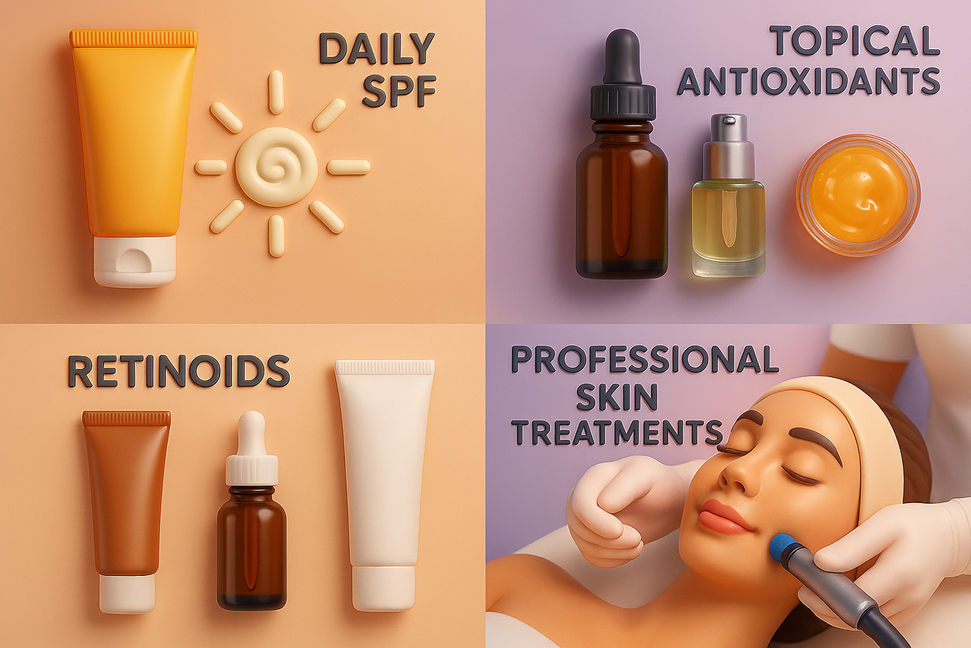
Dermatologist-Approved Fixes
- Daily SPF: Non-negotiable. UV exposure is the leading external cause of visible skin aging. Broad-spectrum sunscreen, used consistently and adequately, remains the most effective defense, capable of significantly reducing photoaging.
- Topical Antioxidants: Vitamin C, E, and niacinamide fight free radicals.
- Retinoids: Boost collagen and cell turnover.
- Professional Treatments: Chemical peels, radiofrequency microneedling and laser resurfacing for stubborn signs.
Consistency matters more than expensive products; it starts with the basics and builds from there.
Your skin’s clock is ticking, but you hold the power to slow it down. Break this habit today and invest in preventive care for lasting radiance. Consult a dermatologist for personalized advice and advanced treatments that complement your routine.

Citations:
- Knuutinen A., et al. Smoking affects collagen synthesis and extracellular matrix turnover in human skin. Br J Dermatol. 2002; 146(4):588-594.

