
How to Stop Skin Time Under the Spring Sun Photo-aging Defense Science
The April sun is an uninvited guest that unexpectedly visits skin that has been accustomed to low ultraviolet rays throughout the winter. It is time to understand the mechanism of photo-damage, which goes beyond simply tanning the skin and breaks the collagen chains deep within the skin.
April, which marks the beginning of spring, is a vibrant time when all things come to life, but for our skin, it is also the month when the most severe trials of the year begin. This is because the skin, whose melanin defense mechanism has weakened while adapting to low sunshine during winter, is exposed without protection to the rapidly strengthening spring sun.
The reason experts emphasize UV protection in April more than in midsummer is that this "unprepared exposure" causes fatal skin aging.
Today, from the perspective of slow-aging, which is the core of recent beauty trends, we will identify the scientific principles of how sunlight advances the skin clock and look deeply into true anti-aging strategies to revive lost elasticity.
Table of Contents
Trend 1. Scientific Reasons Why "Spring Sun" is Scarier Than Winter (UVA Penetration into the Dermis)
Trend 2. Mechanism of Photo-aging: The Process of Sunlight Decomposing Collagen
Trend 3. "Thermal Aging" Caused by UV Rays and Skin Temperature Management Strategies
Trend 4. Post-care Routine for Photo-damage Repair (Soothing & Antioxidants)
Trend 1. Scientific Reasons Why "Spring Sun" is Scarier Than Winter (UVA Penetration into the Dermis)
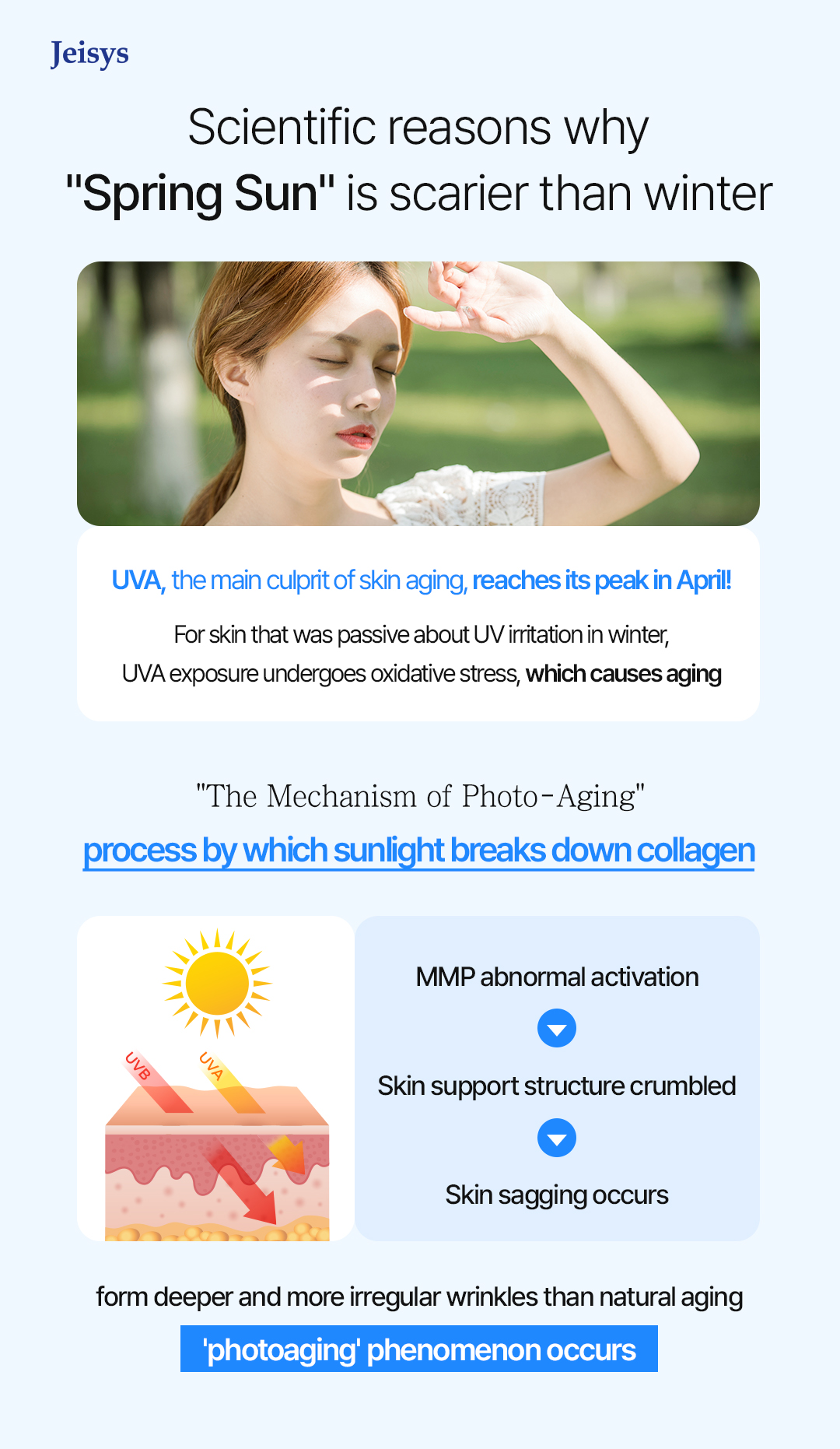
It is easy to think that UV protection only needs to be focused on in midsummer when the skin gets hot, but this is a dangerous misunderstanding. This is because the UVA (long-wave UV) index, the main culprit that penetrates deep into the skin and causes substantial skin aging, already reaches its peak starting in April.
While UVB causes burns on the skin surface, UVA penetrates through glass windows and thin clothes to reach the dermis layer, causing structural deformation of cells. Skin cells that were passive toward UV stimulation throughout the winter experience immediate oxidative stress upon sudden UVA exposure.
This goes beyond simply tanning the skin and becomes a direct cause of skin aging by shortening the lifespan of cells and lowering their inherent resilience. Therefore, to practice slow-aging to maintain healthy skin for a long time, it is essential to have a thorough UV protection habit even in daily life in April.
We must not forget the fact that UV rays are rapidly turning the clock of the skin dermis even at moments when we do not perceive it.
Trend 2. Mechanism of Photo-aging: The Process of Sunlight Decomposing Collagen
The moment sunlight touches the skin, a destructive chain reaction occurs inside the skin, as if dominoes are falling. UV stimulation abnormally activates MMP (Matrix Metalloproteinases), special enzymes that decompose collagen in the skin.
As these enzymes cut through elastin and collagen chains, which are elastic fibers, like scissors, the supporting structure of the skin collapses rapidly. This phenomenon is called "photo-aging," and it takes a nasty form of skin aging that forms much deeper and more irregular wrinkles than natural aging.
Skin whose support structure has collapsed loses elasticity and begins to sag downward, which is a decisive factor in making one look older externally. The core of anti-aging to defend against this is going beyond simple moisturizing to create a routine that protects collagen destroyed by UV rays and promotes its synthesis.
The slow-aging strategy to protect firm facial lines even under the hot light of April begins with defending these collagen chains.
Trend 3. "Thermal Aging" Caused by UV Rays and Skin Temperature Management Strategies
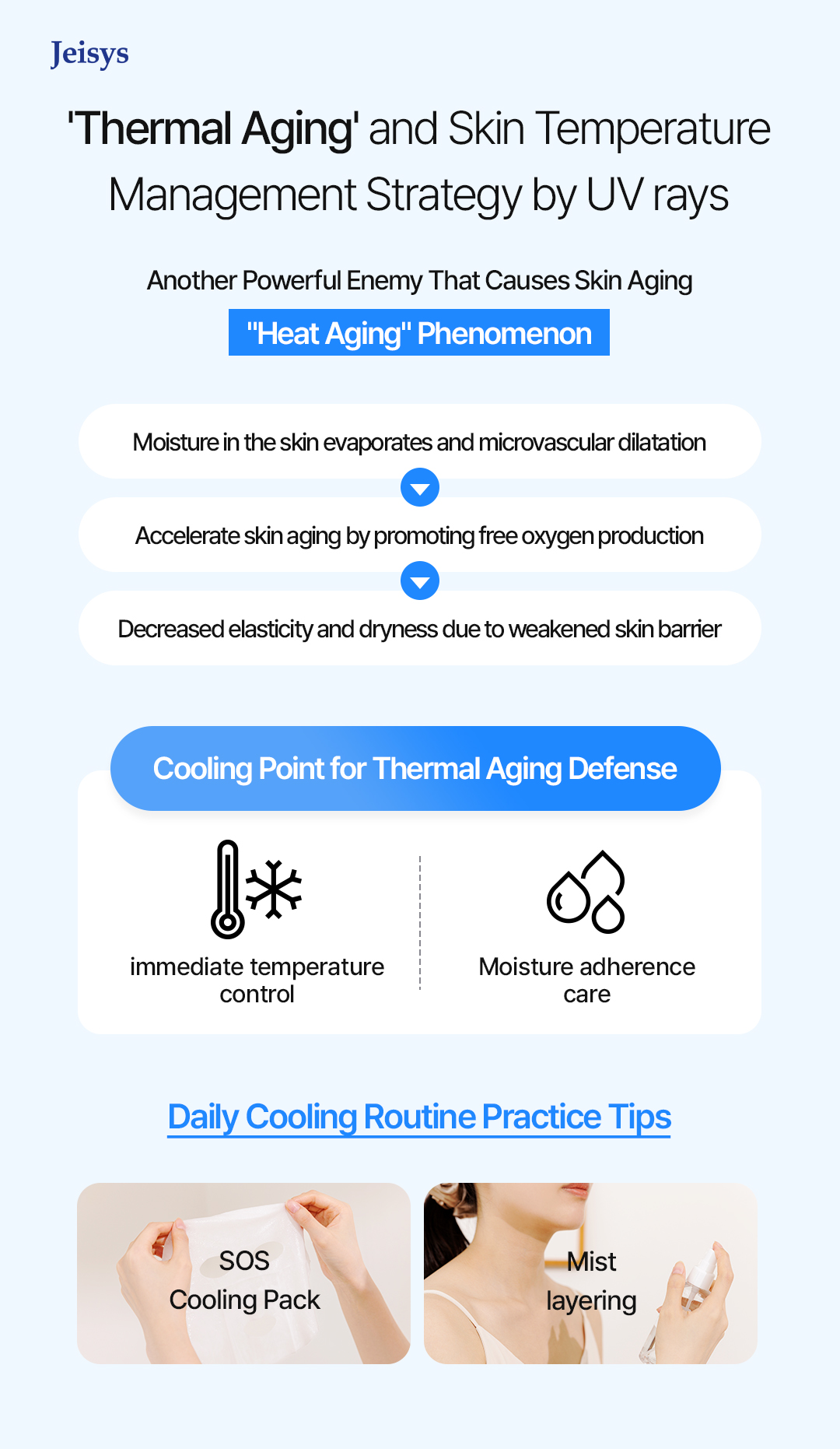
Another powerful enemy inseparable from photo-aging is "thermal aging." When the skin temperature surges above 40°C under the strong spring sun, moisture in the skin evaporates in an instant and microvessels expand.
The strong thermal stimulation that occurs in this process explosively promotes the generation of active oxygen, accelerating the speed of skin aging by more than 3 to 4 times compared to usual. Heated skin causes an inflammatory reaction and weakens the skin barrier, which soon leads to loss of elasticity and dryness.
Therefore, for true anti-aging care, not only UV protection before going out but also "cooling and soothing techniques" that immediately lower the heated skin temperature during or after going out must be performed in parallel.
✔ Cooling Points for Thermal Aging Defense
1) Immediate temperature control: Minimizing the time skin temperature stays outside the normal range is an important practice guideline for slow-aging to stop skin time from external stimuli.
2) Moisture adhesion care: As the temperature rises, the elasticity energy in the skin is rapidly exhausted. Since the destruction of the elastic layer is accelerated when exposed to heat in a dry skin state, it is good to utilize hyaluronic acid complex ingredients that increase moisture retention.
✔ Daily Cooling Routine Practice Tips
* SOS Cooling Pack: On days when you have received particularly a lot of sunlight, soak a sheet mask or cotton pad with plenty of soothing essence, keep it refrigerated, and apply it for 5 to 10 minutes. Lowering the skin temperature can inhibit the activation of collagen-decomposing enzymes (MMP) caused by heat.
* Mist Layering: Use a mist whenever your skin feels hot while being out, but after spraying, you must lightly press it with your palms to let it absorb to prevent additional dryness caused by evaporation.
Trend 4. Post-care Routine for Photo-damage Repair (Soothing & Antioxidants)
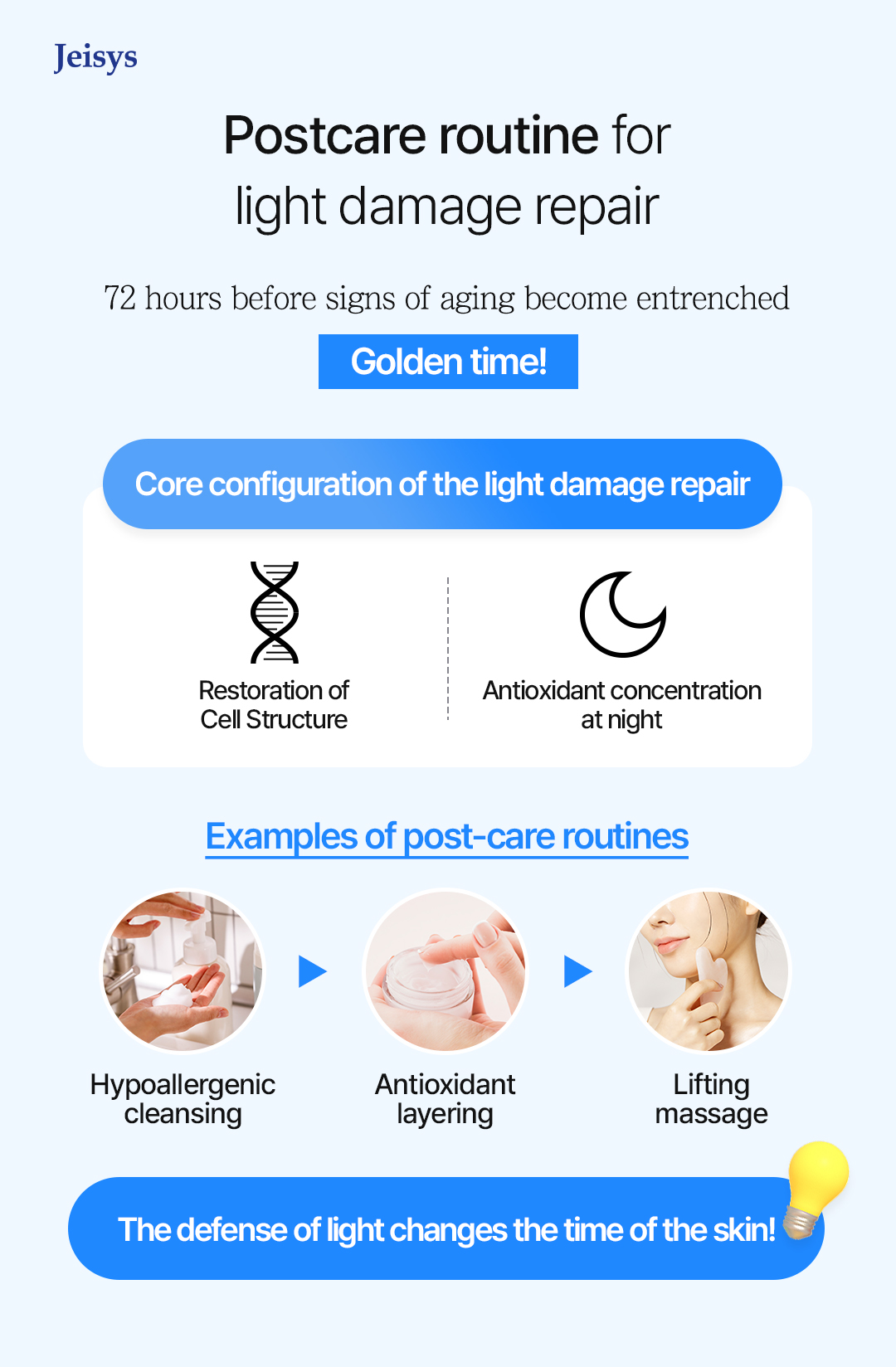
If you have already been exposed to UV rays and photo-damage has begun, you must enter intensive repair care within the "72-hour golden time" before aging signs become fixed. To neutralize the harmful active oxygen left by UV rays during the day, it is good to supply strong antioxidant ingredients such as high-concentration Vitamin C and E during the night, which are excellent at repairing damage to skin cells and defending against skin aging.
Also, for skin that has become sensitive due to the unpredictable temperatures and pollen of April, choose hypoallergenic UV protection products and soothe the skin with soothing products containing Panthenol or Madecassoside ingredients after washing your face.
✔ Core Components of Photo-damage Repair
1) Cell structure repair: Pay attention to peptides or growth factor ingredients that strengthen the fiber structure weakened by UV rays. These routines promote the regeneration rhythm of the skin to double the anti-aging effect.
2) Intensive night-time antioxidants: 10 PM to 2 AM is the golden time when skin cell regeneration is most active. Applying living repair ingredients during this time maximizes collagen synthesis and effectively offsets damage caused by photo-aging.
✔ Post-care Routine Example
* Step 1. Hypoallergenic Cleansing: Remove pollutants and UV protection residues of April, but use a weakly acidic cleanser that does not irritate the skin barrier.
* Step 2. Antioxidant Layering: After applying vitamin or peptide serums, apply a cream or sleeping pack that forms a moisture protective film over them to block moisture loss.
* Step 3. Lifting Massage: Using your fingertips from the chin toward the temples 1 to 2 times a week, pushing from bottom to top improves circulation, increasing the absorption rate of repair ingredients and making the sense of elasticity firmer.
Rebuilding the collapsed skin structure and cultivating the power to recover on its own is the pinnacle of modern anti-aging and the completion of slow-aging that aims for healthy aging. A sophisticated post-care routine creates a virtuous cycle structure that neutralizes photo-attacks during the day and increases the skin defense for the next day.
Defense of light changes the time of the skin.
Our skin is a sensory organ that accepts seasonal changes most sensitively. If you recognize the powerful photo-attack hidden behind the bright sunshine of April and practice systematic UV protection and repair routines, you can maintain confident skin even in the flow of time.
Start a slow-aging routine from today that protects the internal structure of the skin and cultivates the power to recover on its own. Diligent anti-aging management that builds up day by day will maintain the vitality of spring days and present you with "skin time" much younger than your age. Constant management will eventually be the surest shortcut to preventing rapid skin aging and completing solid elasticity!