
Seasonal Skin and Troubles: The Key is Strengthening the Skin Barrier Beneficial Bacteria-Based Skincare to Soothe Troubled Skin
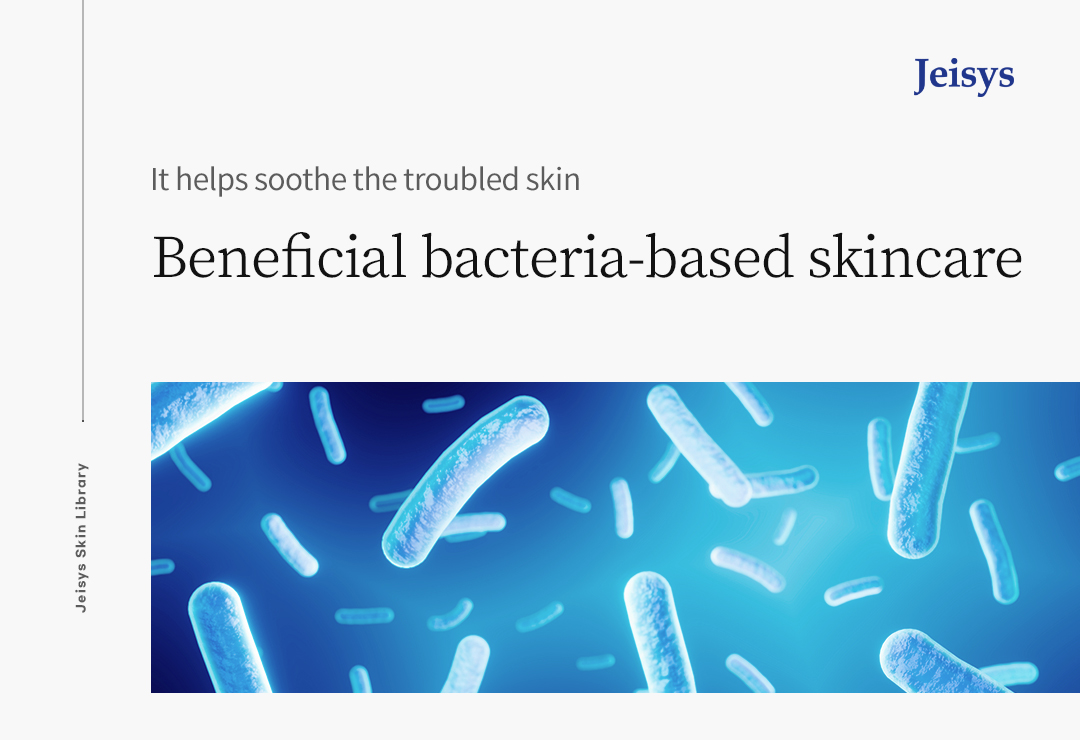
The irregular temperature fluctuations and sudden pollen attacks in May disrupt the microbial ecosystem on the skin surface, namely the microbiome, raising sensitivity to an extreme level.
As harmful bacteria combined with airborne hazardous substances multiply, the skin barrier gets damaged more easily than ever, which soon causes the chronic problem peculiar to change-of-season skin where the outside is oily but the inside is dry.
Simply pushing moisture in through typical hydration cannot resolve the micro-inflammation and flaky dead skin cells of this period.
To cultivate the immunity of the skin itself to protect it out of external irritation, a fundamental skin barrier strengthening strategy is required.
We present a structural skin soothing master plan to calm the overreaction of trouble-prone skin by restoring the balance of beneficial bacteria, and to rebuild a smooth and firm texture once again.
Table of Contents
Trend 1. Drop in Skin Immunity During Seasonal Changes: The Impact of External Irritation on Skin Beneficial Bacteria
Trend 2. Scientific Efficacy of 'Postbiotics' That Determine Barrier Density
Trend 3. Low-Irritation Soothing and Ecosystem Restoration Routine to Calm Hypersensitive Skin
Trend 4. Immunity Management in Daily Life: The Correlation Between Sleep Rhythm and Microbiome Regeneration
Trend 1. Drop in Skin Immunity During Seasonal Changes:
The Impact of External Irritation on Skin Beneficial Bacteria
On a healthy skin surface, billions of microbes live together, forming one firm ecosystem.
However, the sharp daily temperature range and fine dust of May mercilessly break down this balance.
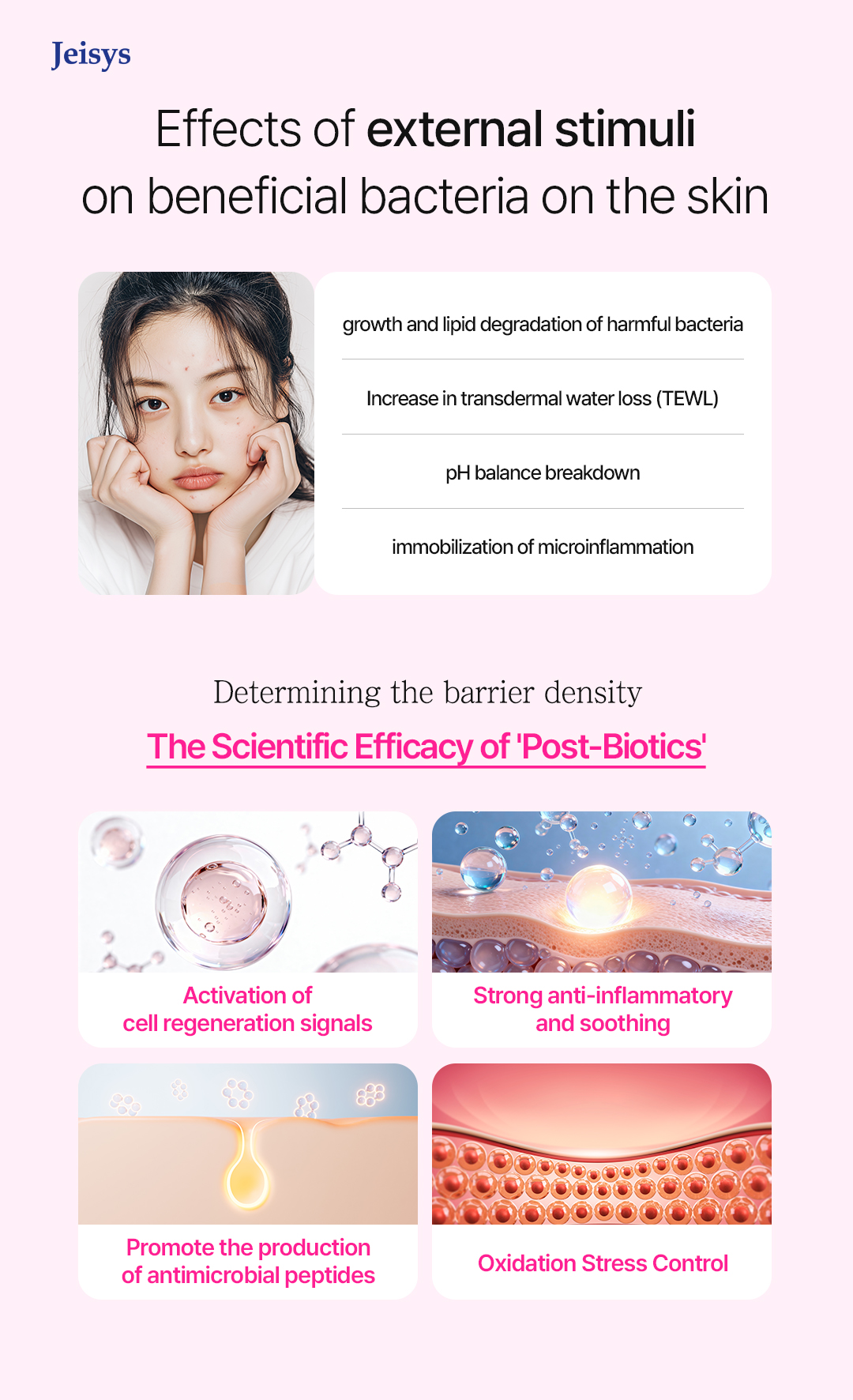
* Proliferation of Harmful Bacteria and Lipid Decomposition: When sebum secretion increases as the temperature rises, harmful bacteria that feed on this grow explosively. Metabolites discharged by harmful bacteria irritate epithelial cells, inducing chronic skin trouble.
* Increase in Transepidermal Water Loss (TEWL): When the power of beneficial bacteria weakens, the lipid membrane that tightly held moisture in the epidermis becomes loose. Consequently, the water retention capacity of the skin barrier drops sharply, transforming it into change-of-season skin accompanied by extreme pulling sensations.
* Collapse of pH Balance: When alkaline pollutants such as pollen and yellow dust tangle and stick together, the weak acidic protective shield of the skin is broken. This hinders skin barrier strengthening, creating a vicious cycle of defenseless exposure to external irritation.
* Fixation of Micro-inflammation: If irritation is repeated, inflammatory cytokines are secreted inside the cells. Due to this, a hypersensitive trouble-prone skin condition that turns red easily even at minor contact becomes prolonged.
In the end, the skin concerns of this period are caused not by simple moisture shortage, but by structural immunity drop originating under the destruction of the microbiome ecosystem.
---
Trend 2. Scientific Efficacy of 'Postbiotics' That
Determine Barrier Density
The core substance of skin barrier strengthening that is recently drawing the most attention in beauty academia is precisely 'Postbiotics'.
This is a metabolite produced by beneficial bacteria, serving as an innovative solution that resolves the stability issues occurring when applying live bacteria and safely delivers active ingredients down to the dermal layer.
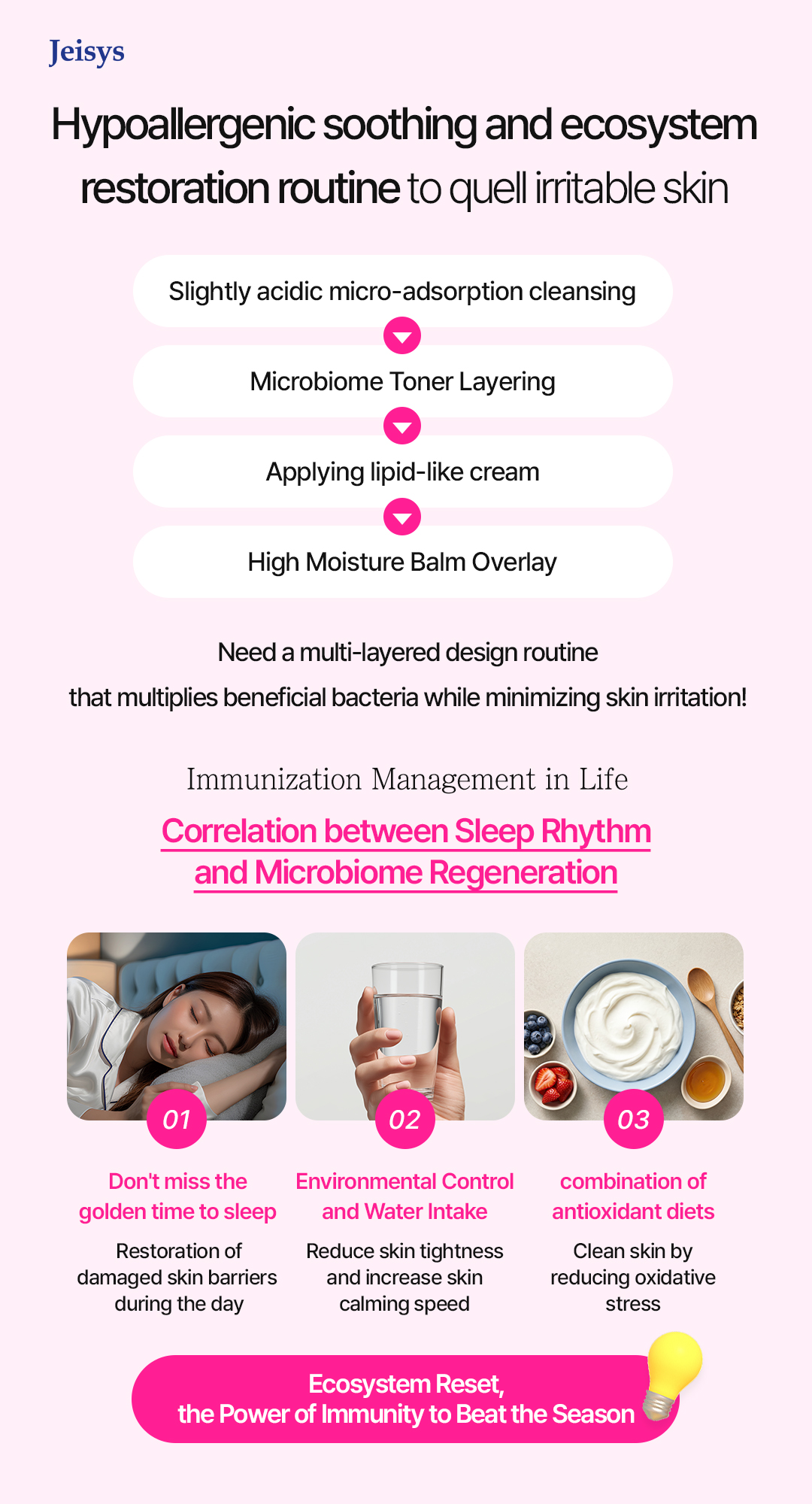
* Activation of Cell Regeneration Signals: Postbiotics promote the differentiation of keratinocytes, performing the role of a ladder that closely rebuilds a collapsed skin barrier.
* Powerful Anti-inflammation and Soothing: It calms cells irritated under air pollutants and immediately suppresses micro-inflammatory reactions, exhibiting excellent skin soothing effects.
* Promotion of Antimicrobial Peptide Production: It induces the skin itself to make natural defensive substances against the invasion of harmful bacteria, breaking the loop of repeated skin trouble.
* Control of Oxidative Stress: By neutralizing free radicals generated by the combined attack of yellow dust and UV rays, it defends against sharp aging and elasticity drop of change-of-season skin.
Filling refined microbiome ingredients into the places where wastes were emptied is the very scientific solution to rescue sensitive trouble-prone skin.
---
Trend 3. Low-Irritation Soothing and Ecosystem
Restoration Routine to Calm Hypersensitive Skin
Applying an excessive number of skincare steps to skin whose balance is already broken is like fanning a fire. A multi-layer design routine that multiplies beneficial bacteria while minimizing skin irritation is required.
* Weak Acidic Micro-Adsorption Cleansing: One must selectively remove pollen and wastes inside pores with a weak acidic cleanser that minimizes frictional force. Squeaky cleansing only worsens skin trouble by scraping away the skin barrier.
* Microbiome Toner Layering: Within 3 minutes immediately after washing the face, apply an essence containing lactobacillus ferment filtrate multiple times to rapidly recover the disrupted pH index and lay down basic skin soothing steps.
* Application of Lipid-Mimetic Cream: Utilize a cream formulated with ceramides, cholesterol, and fatty acids in an optimal ratio to align the disarranged lipid array. This is the core of skin barrier strengthening, putting up an iron defense wall so that external harmful substances cannot penetrate.
* Layering Highly Moisturizing Balm: Especially for change-of-season skin or sensitive trouble-prone skin that is accompanied by itching due to severe dryness or becomes easily red, applying a highly moisturizing balm-type product with strong sealing power thinly at the end, rather than a general lotion, is the key method to maximize moisture locking and barrier protection efficiency.
---
Trend 4. Immunity Management in Daily Life:
The Correlation Between Sleep Rhythm and Microbiome Regeneration
What is as important as applying cosmetics is normalizing the internal immunity clock.
Since the skin ecosystem moves in close synchronization with our biological rhythm.
* Securing the Golden Time of Sleep: Growth hormones and immune substances that help cell regeneration are intensively secreted between 10 PM and 2 AM. Only when this sleep rhythm is stable can the multiplication speed of beneficial bacteria accelerate, and the restoration process of the skin barrier damaged during the day operate smoothly.
* Environment Control and Water Intake: Managing the environment to constantly maintain indoor humidity at 40–60% immediately reduces the physical pulling and stress of change-of-season skin. On top of this, sufficient drinking water helps microcirculation inside cells, raising the skin soothing speed layout scale drastically.
* Accompanying Anti-oxidation Diet: Consuming a diet rich in prebiotics, which serve as food for beneficial bacteria, reduces internal oxidative stress, bringing a synergy effect where the rough texture of trouble-prone skin is smoothly refined.
---
Ecosystem Reset, the Power of Immunity Overcoming the Season
Unlike the bright weather, May is a period that demands the most severe and harsh changes to our skin barrier and microbial ecosystem.
The beneficial bacteria balance broken amidst pouring pollen and fluctuating daily temperature ranges causes skin trouble, and a neglected barrier becomes fixed into a chronic sensitive state.
However, if we understand the immunity mechanism of the skin and respond systematically, we can remain unshaken under any harmful environment.
Purify the ecosystem with postbiotics, practice skin barrier strengthening with thorough moisturization, and govern internal immunity through a regular life.
This is the true skin soothing strategy needed for May full of irritation, and the correct answer to change-of-season skin management that maintains a healthy radiance for a long time.
Tonight, why not start the microbiome reset routine for your exhausted trouble-prone skin?